
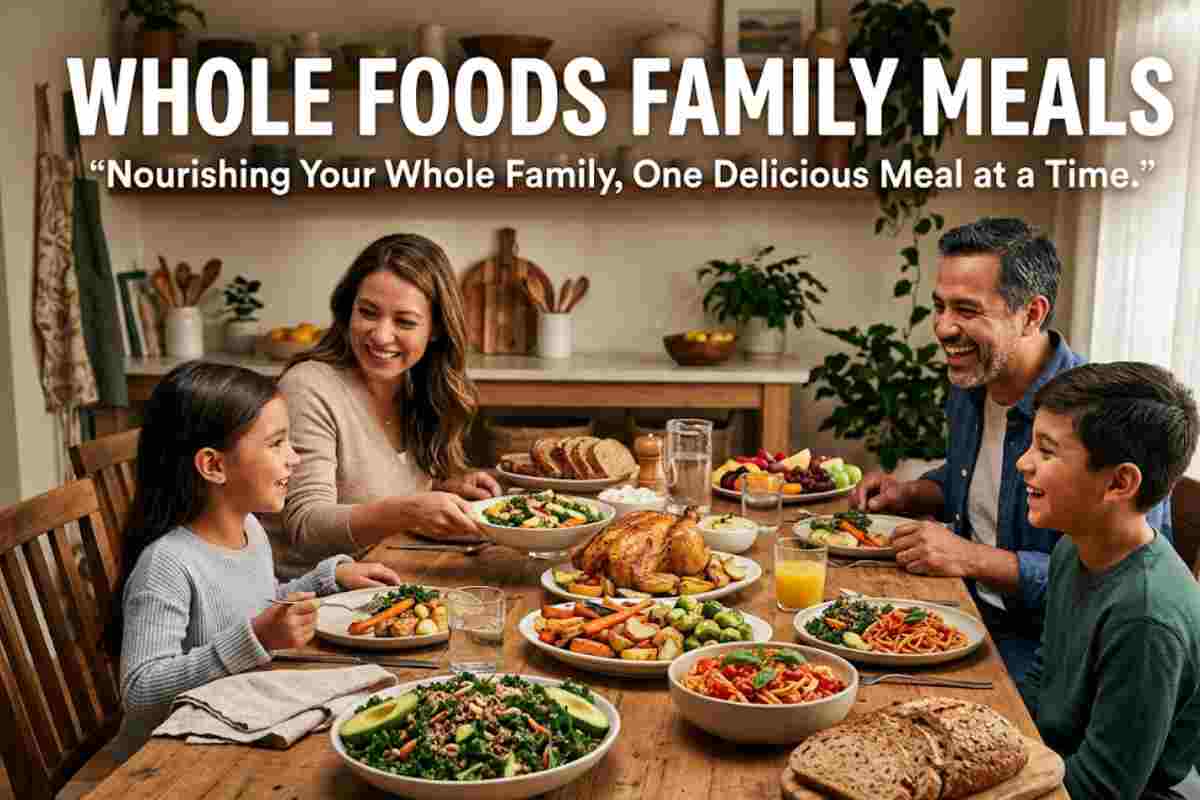
Whole Foods Family Meals are pre-heat or ready-to-eat meal packages sold by the Whole Foods Market, and which would provide 2-4 individuals with meals of minimal preparation. Typically, these meals consist of a main entree, one or two sides and sometimes a salad or a dessert made according to the Whole Foods quality standards of no artificial preservatives, colors, or flavors as well as the use of responsibly sourced ingredients.
Sold in-store (typically in the prepared foods section); occasionally also available online to pick up or have delivered, Whole Foods Family Meals is a convenient offer to families that would prefer wholesome and well-balanced meals but do not have the time to prepare their own food.
What Are Whole Foods Family Meals?
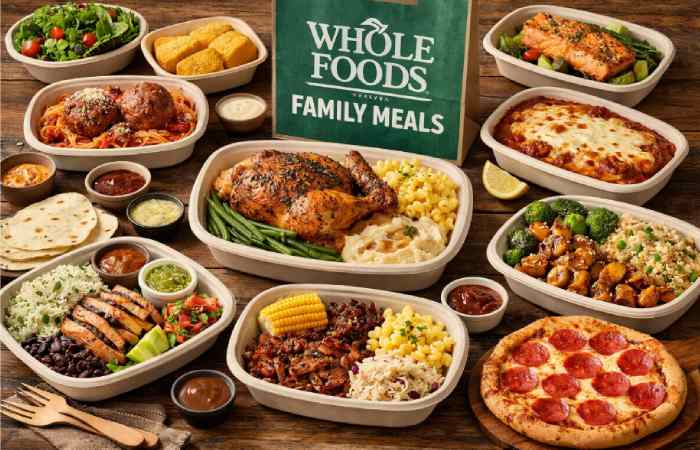
Whole Foods Family Meals are convenient, ready-made or semi-prepared meal bundles offered by Whole Foods Market, designed to feed multiple people—typically a family of 3–4—with minimal cooking effort.
Simple Definition
They are complete meal packages that usually include:
- One main dish (protein) – like chicken, salmon, or meatloaf
- Two or more side dishes – such as vegetables, rice, pasta, or salads
These meals are created to be ready-to-eat, ready-to-heat, or easy-to-cook, making them ideal for busy households.
Why Are Family Meals Popular with Busy Households?
Family meals have gained popularity because many households face:
- Tight work and school schedules
- Limited time for grocery shopping and meal prep
- Increased demand for healthier alternatives to fast food
Whole Foods Family Meals are used to overcome the distance between the ease of takeout and the quality of home-cooked meals. They minimize the stress of daily cooking, save time and yet provide families with an opportunity to sit at the table together and have a decent meal, which is important to many busy parents.
Whole Foods Family Meals vs. Home-Cooked Meals
| Factor | Whole Foods Family Meals | Home-Cooked Meals |
| Preparation Time | 5–15 minutes (mostly reheating) | 30–90 minutes |
| Cooking Skill Required | Minimal | Moderate to high |
| Ingredient Quality | High, curated by Whole Foods | Fully controlled by cook |
| Cost | Moderate to higher | Usually lower per meal |
| Nutritional Balance | Generally well-balanced | Depends on recipe |
| Customization | Limited | Fully customizable |
| Convenience | Very high | Low to medium |
| Cleanup | Minimal | Moderate to heavy |
Who Are Whole Foods Family Meals Best For?
| Audience | Why It’s a Good Fit | Key Benefits |
| Families | Perfect for quick weeknight dinners when time is limited | Saves time, balanced meals, feeds multiple people |
| Working Parents | Reduces daily cooking stress without sacrificing food quality | Minimal prep, high-quality ingredients, reliable option |
| Meal Planners | Works well as planned dinners or backup meals | Predictable portions, easy scheduling, less decision fatigue |
| Health-Conscious Households | Offers better ingredient standards than traditional fast food | No artificial additives, more whole ingredients, better nutrition |
Key Features of Whole Foods Family Meals
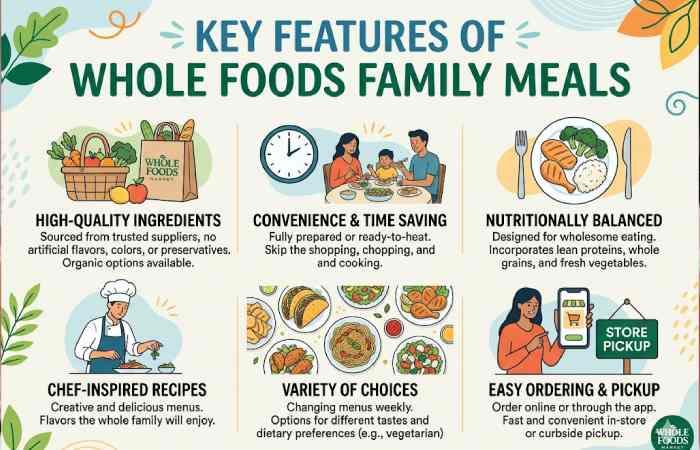
- Convenience-first meals
You can pick them up in-store and either:
- Heat and serve immediately
- Or cook with minimal prep
- Customizable options
Many stores offer a “build-your-own” format where you choose your protein and sides. - Designed for families
Most bundles are portioned to serve multiple people, helping replace takeout or home cooking on busy days. - Chef-prepared quality
Meals are made in the prepared foods section using standards that avoid many artificial additives.
Types of Whole Foods Family Meals
| Meal Type | Main Dish | Sides Included | Typical Servings | Price Range (USD) | Customer Reviews (General Sentiment) |
| Rotisserie Chicken Meals | Classic or seasoned rotisserie chicken | Mashed potatoes, roasted vegetables, or salad | 3–4 people | $18 – $28 | Praised for value, flavor, and convenience |
| Pasta & Comfort Food Meals | Baked ziti, mac & cheese, lasagna, or chicken alfredo | Garlic bread, salad, or roasted veggies | 3–4 people | $20 – $32 | Loved for taste and portion size; some note higher calories |
| Plant-Based & Vegetarian Options | Vegetable curry, grain bowls, plant-based pasta | Roasted vegetables, rice, or legumes | 2–4 people | $18 – $30 | Appreciated for quality ingredients and variety |
| Seasonal & Limited-Time Family Meals | Holiday roasts, BBQ trays, themed meals | Seasonal sides (stuffing, potatoes, salads) | 4–6 people | $30 – $60 | ½ Highly rated for freshness and special-occasion value |
What’s Included in a Whole Foods Family Meal
| Component | Description | Typical Servings | Price Range (USD) | Customer Reviews (General Sentiment) |
| Entrées (Protein Options) | Rotisserie chicken, baked salmon, meatballs, plant-based mains | 3–4 people | $12 – $22 | High praise for freshness and flavor |
| Side Dishes | Mashed potatoes, roasted vegetables, rice, pasta, mac & cheese | 3–4 people | $6 – $12 | Well-liked; some note mild seasoning |
| Add-Ons: Salads | Caesar, mixed greens, grain-based salads | 2–4 people | $5 – $10 | Fresh and crisp, popular add-on |
| Add-Ons: Bread | Dinner rolls, focaccia, cornbread | 3–4 people | $4 – $8 | Soft and flavorful |
| Add-Ons: Desserts | Brownies, cookies, mini cakes | 2–4 people | $6 – $12 | ½ Often highlighted as a favorite |
| Portion Sizes & Servings | Meals designed to feed families | 2–4 people (some up to 6) | Included in meal price | Generous for most households |
Whole Foods Family Meals vs Home-Cooked Meals
| Factor | Whole Foods Family Meals | Home-Cooked Meals |
| Time & Effort | Ready-to-heat or serve; minimal prep (5–15 min) | Requires shopping, prep, and cooking time (30–90+ min) |
| Typical Cost per Serving | ~$6.25–$7.50 per serving for family meal packs (4 servings ~$25–$30) – though some viral meal deals are around $6.50/serving for families of 4 | Often much lower: ~$3–$6 per person when cooking from scratch using bulk ingredients and whole foods |
| Ingredient/Nutrition Quality | High-quality ingredients, transparent sourcing (no artificial additives) often perceived as healthy; nutrient info usually labeled | Maximum control over ingredients, portion size, and nutrient balance; fresh produce and whole grains maximize nutrition |
| Customization & Flexibility | Limited to available prepared options; some build-your-own counters but still within store offerings | Fully customizable recipes, portion sizes, seasonings, and diet-specific needs |
| Convenience & Reliability | Very high convenience; perfect for busy weeknights, quick meals, or when cooking isn’t feasible (shoppers praise ease and quality) | Requires planning and execution; best for days with time and motivation |
| Health Impact (General Review) | Generally nutritious and balanced, though prepared foods may vary in sodium and calorie content compared to scratch cooking | Typically better for long-term health when focused on whole, minimally processed ingredients; studies link home-cooked meals with improved health outcomes vs processed/prepared foods |
| Price Sensitivity by Country/Market | Price varies by region and store; at many U.S. stores, prepared family meals can cost $25–$30 (and sometimes sell out due to popularity) | Local market food costs vary widely — in the U.S. and many countries, basic home meals are significantly cheaper than pre-prepared options |
| Typical Review Sentiment | Positive for taste, convenience, and quality; some note price premium and occasional serving size concerns | Universally appreciated for cost savings and ingredient control; critiques focus on time investment and skill required |
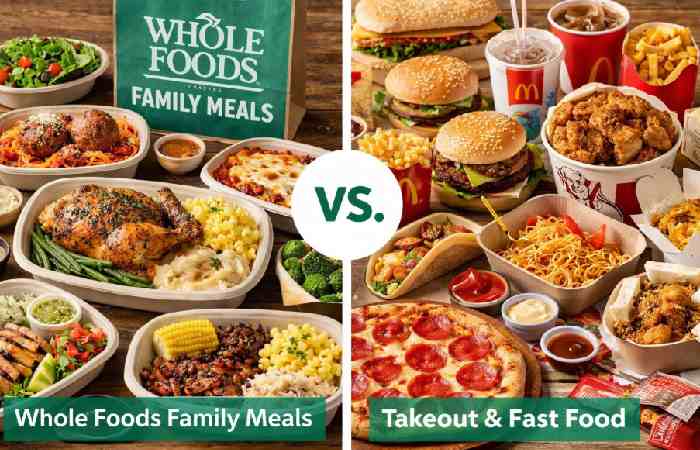
Whole Foods Family Meals vs Takeout & Fast Food
Prepares dishes using premium-grade ingredients that contain no artificial colors, flavors, sweeteners, and preservatives; most of the food they offer contains vegetables and nutrient-rich foods – customers report on transparency and flavorful, well-balanced prepared foods.
More often contain refined carbs, added sugars, unhealthy fats, and sodium; are generally not as nutrient-dense as whole-food-based meals.
Eating fast foods may eventually lead to weight gain and metabolism problems.
Usually greater price per meal (in the U.S., a family meal costs around $25 to $30 a person, versus $6.25 to $7.50 per serving), and the premium rate is based on quality and procurement; some patrons consider the price to be worthwhile and others think that portions or prices in certain locations seem different.Made to serve the family (usually 3-4 or more), with equal sides and mains; review sentiment observes that portions are typically generous but may differ by store and product.A lot of consumers enjoy the quality of meals, transparency of the ingredients, and convenience, some clients complain of the prices, inconsistency, or the difference between the locations.
The quality of the reviews differs across brands and products; fast food is valued due to its speed, and affordable prices, whereas the health-conscious population tends to criticize the taste, nutrition, and consequences.
Whole Foods Family Meals vs Takeout vs Fast Food
| Feature / Aspect | Whole Foods Family Meals / Homemade | Takeout & Fast Food |
| Cost per Meal | Typically lower cost per serving when cooked at home, especially for families; e.g., ~$3–$6 per person for basic meals and family bundles like Whole Foods deals (~$9/person for 4) — can save money overall. | Often higher cost per meal, especially fast food combos or restaurant takeout (~$7–$15+ per person) due to service, convenience and portion pricing. |
| Overall Monthly Cost | Regular home meals generally cost significantly less monthly than frequent takeout; home cooking can cut food budget by a large margin. | Higher monthly spending with frequent orders — delivery fees and tips add up. |
| Nutrition | Greater control of ingredients, fresh whole foods (fruits/veg/lean proteins) → more vitamins, minerals, fiber. | Often high in sodium, saturated fats, refined carbs and low in micronutrients — can contribute to long-term health issues if eaten frequently. |
| Portion Control | Easy to control portion sizes; less likelihood of overeating. | Portions tend to be larger and calorie dense, leading to overconsumption. |
| Ingredient Quality | Ingredients can be chosen for quality, freshness, and dietary needs (e.g., low salt, low sugar). | Quality varies; often includes additives, preservatives, and processed ingredients. |
| Customization | Customizable to dietary preferences or restrictions (vegetarian, low-sodium, gluten-free). | Limited customization; healthier options are available on some menus but may still be less nutritious overall. |
| Convenience | Requires planning, shopping, prep, and cleanup — can be time-intensive. | Offers quick, no-prep convenience — ideal when time is limited. |
| Long-Term Health Impact | Tends to support healthier eating habits and lower risk of chronic diseases when based on whole foods. | Frequent consumption associated with increased risks of obesity, heart disease, diabetes due to high fats/sodium. |
Comparison Table
| Factor | Whole Foods Market Family Meals | Takeout (Restaurants) | Fast Food Chains |
| Average Price (Family of 4) | ~$28–$35 total | ~$40–$75 total | ~$30–$50 total |
| Price Per Person | ~$7–$9 | ~$12–$20 | ~$8–$12 |
| Typical Meal Examples | Chicken + 2 sides, salmon meals | Pizza, Chinese, Indian, Thai | Burgers, fries, combo meals |
| Health & Ingredients | Fresh, fewer additives, cleaner ingredients | Varies, often high oil/sodium | Highly processed, high sodium |
| Convenience | Grab + heat (20–30 mins) | Delivery in 30–60 mins | Instant / ready in minutes |
| Customization | Moderate (build-your-own meals) | High (full menu variety) | Low–moderate |
| Portion Size | Designed for 3–4 people | Large, varies by cuisine | Individual portions |
| Best For | Balanced, healthier family dinners | Variety & indulgence | Speed & quick meals |
| Resource Links | View Whole Foods Family Meal Info | Average Takeout Cost Breakdown | Food Cost & Fast Food Insights |
Pricing & Value for Money — Whole Foods Family Meals
| Meal Type | Price Range (USD) | Estimated Cost per Serving | Customer Review Insights |
| Pre-Packaged Family Meal (4 servings) | ~$25–$30 | ~$6.25–$7.50 | This is usual in reviewers as decent prepared food, but some observe that this is more costly than homemade food. |
| Build-Your-Own Family Meal (custom) | ~$35 (4 people) | ~$8.75 | An excellent option when it comes to customizable proteins + sides; good feedback in terms of customizing and flexibility and balance. |
| Single-Serve Custom Meal | ~$13 (1 serving) | ~$13.00 | Good to use when one is alone and regarded as high-end pricing relative to fast food. |
| Rotisserie/Prepared Foods (per item) | ~$9–$13 (per entrée item) | N/A | Mixed remarks – some feel that the price is good considering the quality of ingredients, others believe that hot bar/prepared food could be expensive considering the quality of the food. According to community reviewers, there is variation between locations. |
How Prices Vary by Location
- Rates in large metro regions in the United States are more likely to remain higher than in smaller cities or suburbs.
- There are store-to-store variations as local prices remain influenced by local ingredients and size of the store.
- Ready-made food (e.g. through Too Good To Go bags) can save a lot of money on a per-meal basis – as low as less than $10 per meal (and multiple servings).
Nutritional Value & Ingredient Quality — Whole Foods Family Meals
| Nutrition Factor | Family Meals Overview |
| Whole Foods Quality Standards | The Whole Foods Markets is also a strict prohibitor of hundreds of artificial ingredients, colors, sweeteners, and preservatives found in all food sold by the company, even prepared foods, in an effort to provide high-quality and more natural and traceable ingredients. Their poultry, meat, seafood and eggs are also of high animal welfare and sustainability standards. |
| Protein Balance | Most of the family meals contain good sources of protein (e.g., chicken, fish, or plant-based proteins). As an example, there are ready-made foods that can provide large amounts of protein per serving (e.g., a chicken meal in Indian style can have approximately 37g protein per serving). |
| Carbohydrates & Veggie Content | The quantity of carbohydrates in each dish also differs, and dishes are usually accompanied by rice, pasta, or grains and vegetables. When it is accessible, whole foods tend to put offered vegetable-based sides and whole grains, which may enhance dietary fiber and micronutrient content. |
| Sodium Considerations | Even the prepared family meals can contain some moderate to high amounts of sodium, like some curry-style meals contain about 960 mg sodium per serving (almost half of a normal daily sodium intake). Labels should remain checked, particularly in the case of regulating sodium consumption. |
| Calorie Considerations | The amount of calories may differ by a considerable margin depending on the type of meal. Ready-to-heat meals can have thick sauces or grains that meet the need of a family meal. As an example, 670 kcal per serving of individual components in certain meals (about 100 g) serves as a reliant variable, on the one hand, yet this is highly dependent on portions. |
Whole Foods Family Meals Menu (Popular Choices)
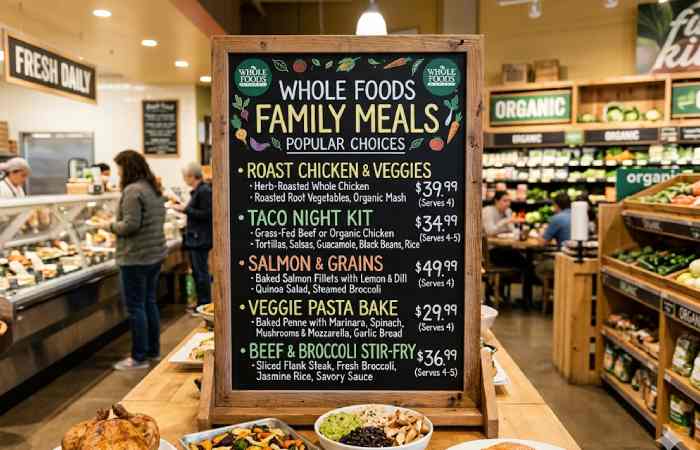
The Whole Foods Family Meals menu isn’t fixed—it rotates and is often customizable—but there are several popular, commonly available meal options you’ll find in the Whole Foods Market prepared foods section.
Popular Protein (Main Dish) Options
These are typically the centerpiece of your family meal:
- Rotisserie Chicken (classic & most affordable option)
- Rosemary Lemon Chicken
- Grilled Salmon / Paleo Grilled Salmon
- Turkey Meatloaf
- Spaghetti & Meatballs
- Chicken Tikka Masala
- London Broil / Steak Options
These proteins are usually served in portions suitable for 3–4 people.
Popular Side Dishes
Family meals usually include 2 sides, which can remain mixed and matched:
- Mashed potatoes
- Roasted sweet potatoes
- Green beans
- Brussels sprouts
- Steamed vegetables
- Pasta or rice dishes
Pasta & Comfort Meal Combos
These are ready-made family-style trays:
- Fettuccine Alfredo with Chicken & Broccoli
- Cheese Manicotti
- Spaghetti Bolognese-style meals
Healthy & Special Diet Options
Whole Foods also offers meals tailored to dietary needs:
- Paleo salmon with veggies
- Vegetarian pasta or mushroom-based dishes
- Plant-based bowls (lentils, chickpeas, quinoa)
Build-Your-Own Family Meal (Most Popular Format)
One of the biggest highlights:
- Choose 1 protein + 2 sides
- Fully customizable in-store
- Available as fresh or pre-packed trays
This is the most popular option because you can mix meals like:
- Grilled salmon + green beans + sweet potatoes
- Chicken + mashed potatoes + roasted veggies
Sample Family Meal Combo
A typical combo might look like:
- Main: Grilled chicken
- Side 1: Mashed potatoes
- Side 2: Green beans
Pros & Cons of Whole Foods Family Meals
| Advantages | Disadvantages |
| High Convenience – Meals are ready to be heated or taken away, ideal on the hectic evenings. The ease with which they can remain used as a weekday dinner is always acclaimed by reviewers. (newshealthwatch.com) | Higher Price Point -Typically costs more per serving than homemade meals; high pricing remain observed by many shoppers as compared to low-end grocery meals. |
| Quality Ingredients- It uses Whole Foods extremely rigid requirements (no artificial additives), which attracts health-conscious customers. Customers tend to point to the more natural ingredient list as opposed to most takeout products. (wholefoodsmarket.com) | Poor Customization Breadth Buyers remain not able to customize the meal like they would at home (e.g., ingesting substitutes, seasoning alterations). |
| Balanced Meals – Entrée meals normally include side dishes and occasionally salads, which makes them offer more balanced dinners compared to some of the fast food and delivery service. | Variability of Portion Size – A few reviewers comment that the size of portions varies based on the store or the type of meal. |
| Time-Saving – Saves hours of prep and cooking, which many families appreciate during busy weeks. | Constraints of Shelf-Life These meals are perishable and cannot remain stored as long as they can remain stored in a freezer or as traditional leftovers. |
| Better Than Fast Food – Often discussed as a healthier version of the regular fast food, more veggies and less processed food. | Availability Varies by Location – Not all meal varieties remain consistently stocked at every Whole Foods store, which can frustrate repeat buyers. |
| Quality Perception – Many customers feel the taste and quality justify paying a bit more than typical ready meals. | Not Always Everyday Affordable – Seen by some shoppers as occasion-oriented rather than budget meal staples. |
How to Order Whole Foods Family Meals
| Ordering Method | Availability | Convenience Level | Links & How to Order | Email / Contact |
| In-Store Purchasing | Available at most Whole Foods Market locations | High — walk in and select meals directly | Visit your local Whole Foods store and go to the Prepared Foods section for meals | Contact your local store directly (phone/email from store website) |
| Online Ordering via Whole Foods Website | Available in select regions (meal preorders & prepared food items) | High — order anytime from web or app | • Whole Foods Market online ordering — wholefoodsmarket.com/online-ordering | Via Amazon/Whole Foods online support at wholefoodsmarket.com/contact or within your account |
| Pickup via Grocery Pickup | U.S. locations (pickup windows, often free) | Very High — curbside or in-store pickup | • Free one-hour pickup (Prime members on orders $35+) • Pickup and delivery options — shop on amazon.com/wholefoods or Whole Foods tab in Amazon app | Confirmation emails and picker notifications after ordering |
| Delivery via Grocery Delivery | Many cities in the U.S. and Canada through Amazon/Instacart | High — delivered to your door | • Whole Foods grocery delivery (Amazon/Instacart) | Delivery instructions and support via Amazon/Instacart apps or help pages |
| Third-Party Delivery Services (e.g., Grubhub) | Select stores for prepared meals | Medium-High — specialized meal delivery | • Order prepared meals from Whole Foods via Grubhub in supported areas | Grubhub customer support within app/website |
Customer Reviews & Feedback — Whole Foods Family Meals
| Review Category | Customer Feedback |
| Common Praise — Taste & Quality | Many shoppers enjoy how easy and flavorful the meals are, noting they provide a convenient, balanced dinner without much prep. The clean ingredient standards remain frequently mentioned as a plus and make these meals a “weeknight win” for busy households. |
| Common Praise — Convenience | Customers love the ready-to-heat convenience and how family meals eliminate the need for cooking from scratch, especially on hectic evenings. These meals remain often appreciated as a time-saver during busy weeks. |
| Common Complaints — Price | Many shoppers feel the prices are high compared with homemade meals or simpler grocery options, reaffirming the “Whole Paycheck” reputation — even though quality is high, cost can be a barrier for regular purchase. |
| Common Complaints — Availability | Some community feedback notes that family meals can sell out quickly or vary widely by store; consistently finding the same menu can be frustrating for repeat customers. |
| Mixed Feedback — Prepared Foods Quality | There are mixed opinions about prepared foods in general at Whole Foods — some customers claim items can be undercooked or inconsistent across locations, while others enjoy the rotating meal options and quality. |
| Mixed Feedback — Prepared Meal Bags (Discounted) | Users of programs like Too Good To Go have given positive remarks about value when getting discounted prepared meals, though consistency is unpredictable — some bags are seen as a great deal, others less so. |
| Overall Customer Sentiment | Feedback trends toward positive convenience and ingredient praise, but with caveats around price and inconsistency in portions or availability. Many shoppers still view family meals as a helpful occasional solution, especially when balanced with home cooking. |
Final Word
If you value good ingredients, responsible sourcing, and fewer night-of cooking hassles, Whole Foods Family Meals deliver great convenience and quality — and many customers feel the trade-off in price is justified for that balance. Just be mindful of pricing and portion consistency across locations.
 About
About