
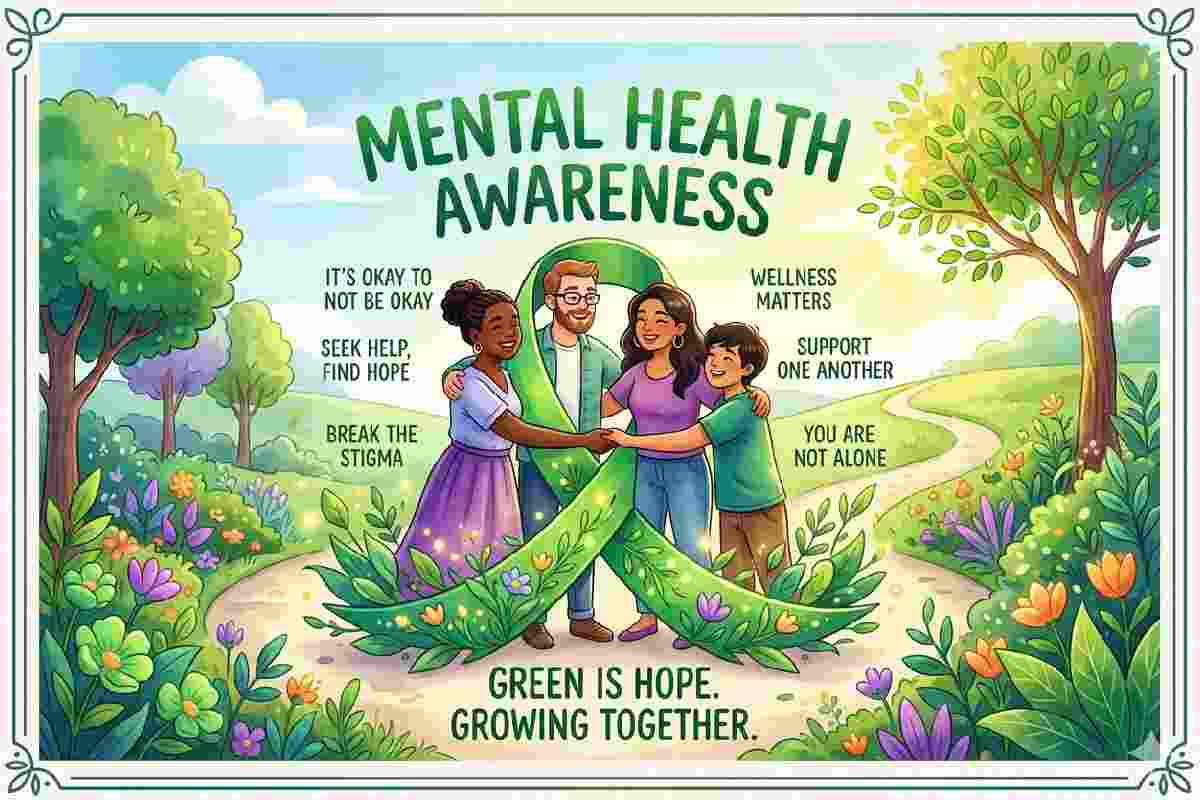


When there is talk of mental health awareness the color most widely used is green. In campaigns, on non-profit websites and organizations, and throughout May for Mental Health Awareness Month, green is recognized as a sign of hope, strength, and renewal to all suffering with mental health conditions. Understanding these colors can further people, organizations, schools and offices know how to show support in an appropriate way.
The main mental health awareness color is green, signifying hope, strength, and renewal. During Mental Health Awareness Month, green ribbons are often displayed, as a symbol that they support those with mental health conditions. Other colors have significance as well, for different disorders including lime green representing bipolar disorder, and silver representing brain disorders. Here’s an explanation of each color and how to use it responsibly and respectfully.
What Is the Official Mental Health Awareness Color?
The color designated for overall mental health awareness is green. Green is often featured in campaigns by mental health organizations such as Mental Health America and National Alliance on Mental Illness and particularly during Mental Health Awareness Month each May.
Why Green?
Green represents:
- Growth and renewal
- Hope and recovery
- Calm and balance
- Fresh starts
When referring to mental health, green can also be said to represent healing and strength.
When substance use begins to affect emotional well-being and daily functioning, seeking professional guidance can be an important step toward recovery. For those experiencing withdrawal, learning about the benefits of medically supervised detox can help them understand why appropriate medical support matters.
The History Behind the Green Ribbon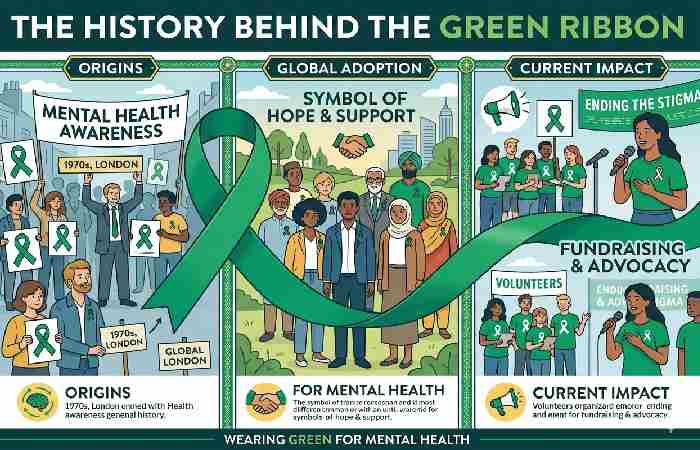
The mental health awareness ribbon arose out of the overall awareness ribbon movement popular in the 1990’s. Green came to be associated with mental health advocacy, primarily to counteract the pervasive stigma long associated with this topic.
With mental health disorders representing an overwhelming share of the world’s burden of disease, a highly visible awareness campaign was surely warranted, based on figures by the WHO.
Awareness colors help:
- Normalize discussions regarding mental health
- Encourage early intervention
- Promote access to treatment
- Discourage discrimination
- Mental health awareness also means recognizing when professional treatment may be helpful and finding an environment that respects each person’s needs. Understanding how to approach choosing a rehab program that supports holistic well-being can help individuals make more informed decisions about their recovery.
Mental Health Awareness Month and the Green Movement
Mental Health Awareness Month remain observed each May in the United States. It was first established in 1949 by Mental Health America.
Today, green remain prominently featured in:
- Social media campaigns
- School and workplace initiatives
- Fundraising events
- Awareness ribbons and merchandise
You’ll often see hashtags like:
- #MentalHealthAwareness
- #WearGreen
- #EndTheStigma
- Everyday habits such as regular sleep, physical activity, supportive relationships, and mindfulness can contribute to emotional well-being. For people recovering from substance use, maintaining wellness after drug rehab can also involve building healthy routines and continuing to seek appropriate support.
Mental Health Awareness Colors by Condition
While green represents general mental health awareness, specific conditions also have their own associated colors.
| Condition | Awareness Color | Meaning |
| General Mental Health | Green | Hope, strength, renewal |
| Bipolar Disorder | Lime Green | Energy, balance |
| Depression | Green (shared) | Healing and growth |
| Anxiety Disorders | Teal | Calm and clarity |
| PTSD | Teal | Stability and awareness |
| ADHD | Orange | Energy and visibility |
| Brain Disorders | Silver | Brain health and research |
Note: Colors may vary slightly between organizations, but the above remain widely recognized across major advocacy groups.
Everyone’s path toward better mental health is different, and some people may benefit from exploring treatment options beyond their immediate community. Learning about traveling to rehab for a change of environment can help readers consider the practical factors involved in seeking care away from home.
Why Mental Health Awareness Colors Matter
Color symbolism is more than aesthetic — it has psychological and social impact.
- Reduces Stigma
When communities publicly display green, it sends a signal: mental health conversations are welcome here.
- Encourages Help-Seeking
Research published by National Institute of Mental Health highlights that awareness campaigns improve recognition of symptoms and treatment utilization.
- Builds Community Support
Visible symbols create solidarity for people who may otherwise feel isolated.
Raising awareness about mental health means encouraging open conversations and helping people recognize that support is available. When substance use becomes difficult to manage, exploring professional addiction treatment options can be a constructive step toward addressing the issue with appropriate care.
Mental Health Awareness Month — At a Glance
| Topic | Key Points | Resources & Links |
| When It’s Observed | Mental Health Awareness Month takes place every May in the United States and is recognized globally by many organizations. | Mental Health America – Official Mental Health Awareness Month page: https://mhanational.org/mental-health-month |
| Purpose | To increase public understanding of mental health conditions, reduce stigma, promote early intervention, and encourage access to support and treatment. | National Alliance on Mental Illness – Awareness and education resources: https://www.nami.org/Get-Involved/Awareness-Events/Mental-Health-Awareness-Month |
| History | First established in 1949 by Mental Health America to draw attention to the importance of mental health and wellness. | Mental Health America – History of the month: https://mhanational.org/history-mental-health-america |
| Campaign Themes | Each year may feature a theme relevant to current mental health priorities (e.g., resilience, community care, workplace wellness). Themes often emphasize real-life strategies and stories. | Mental Health America – Announced themes & initiatives: https://mhanational.org/mental-health-month |
| Popular Symbols | Green ribbons and color campaigns are widely used to show solidarity, reduce stigma, and promote open dialogue. | National Alliance on Mental Illness – Symbolism and awareness efforts: https://www.nami.org/Get-Involved/Awareness-Events/Mental-Health-Awareness-Month |
| Activities & Events | Awareness walks, educational webinars, social media campaigns (#MentalHealthAwareness), workplace wellness programs, screenings, and community outreach events. | World Federation for Mental Health – Global outreach and observances: https://wfmh.global/activities/ |
| Impact on Public Health | Awareness activities support early recognition of symptoms, encourage help-seeking behavior, and contribute to reduced stigma and improved access to resources. | World Health Organization – Mental health and public awareness importance: https://www.who.int/news-room/fact-sheets/detail/mental-health-strengthening-our-response |
How to Use Mental Health Awareness Colors Respectfully
If you want to show support, here are meaningful ways to use mental health awareness colors:
Wear a Green Ribbon
- Pin it to clothing during May
- Include it in workplace wellness programs
Update Digital Assets
- Add green accents to social media profiles
- Share educational content with green-themed graphics
Organize Events
- Host “Wear Green Days”
- Organize mental wellness workshops
- Share local crisis resources
Support Advocacy Organizations
Consider supporting groups like:
- National Alliance on Mental Illness
- Mental Health America
- World Federation for Mental Health
Common Misconceptions About Mental Health Awareness Colors
“Is There More Than One Official Color?”
Green is the primary general awareness color. Other colors represent specific diagnoses but do not replace green as the universal symbol.
“Is Mental Health the Same as Brain Health Awareness?”
Not exactly. Brain disorders may use silver, but mental health awareness broadly focuses on psychological well-being.
“Do Colors Replace Action?”
No. Colors raise awareness, but meaningful change requires education, policy reform, and access to care.
The Psychology Behind Green and Emotional Wellness
| Psychological Effect of Green | What It Means for Emotional Wellness | Supporting Research & Resources |
| Associated with Calmness & Relaxation | Green environments are linked to reduced stress levels and improved mood regulation. Exposure to natural green spaces may lower cortisol (stress hormone) levels and promote emotional stability. | American Psychological Association – Research on nature exposure and stress reduction: https://www.apa.org/monitor/2020/04/nurtured-nature National Institutes of Health – Nature exposure and mental health study overview: https://www.nih.gov/news-events/nih-research-matters/green-space-may-improve-mental-health |
| Symbol of Growth & Renewal | Green is culturally tied to growth, rebirth, and restoration — reinforcing messages of recovery in mental health journeys. | Mental Health America – Why green represents mental health awareness: https://mhanational.org/mental-health-month |
| Linked to Emotional Balance | In color psychology, green sits at the center of the visible spectrum, symbolically representing balance and harmony — key components of emotional regulation. | British Psychological Society – Overview of color psychology insights: https://www.bps.org.uk/psychologist/color-and-psychology |
| Enhances Restorative Attention | Exposure to green settings improves attention restoration, which can reduce mental fatigue and cognitive overload. | National Library of Medicine – Systematic review on green space and cognitive restoration: https://pubmed.ncbi.nlm.nih.gov/31021874/ |
| Encourages Help-Seeking & Openness | Using green in awareness campaigns signals safety and approachability, potentially reducing stigma and encouraging conversations about mental health. | National Alliance on Mental Illness – Mental health awareness campaigns and stigma reduction: https://www.nami.org/Get-Involved/Awareness-Events |
Practical Ways Organizations Can Integrate Mental Health Awareness Color
Workplaces
- Green-themed internal newsletters
- Mental health resource pages
- Employee assistance program promotion
Schools
- Classroom discussions
- Art projects incorporating awareness colors
- Assemblies during May
Healthcare Providers
- Waiting room information displays
- Free screening days
- Community outreach events
Frequently Asked Questions (FAQ)
What color represents mental health awareness?
Green is the primary color representing general mental health awareness.
What month is mental health awareness observed?
Mental Health Awareness Month remain observed in May in the United States.
What does the green ribbon mean?
The green ribbon symbolizes hope, strength, support, and recovery for individuals living with mental health conditions.
Are there different colors for different mental illnesses?
Yes. For example, lime green remain often used for bipolar disorder, teal for anxiety and PTSD, and orange for ADHD.
Can businesses use the mental health awareness color?
Yes. Businesses can use green in campaigns, events, and branding to support awareness initiatives, especially during May.
Final Conclusion
The main color of mental health awareness is green and represents hope, healing, and recovery. Whether it’s wearing a green ribbon, refreshing your brand during May, or holding awareness events, there are many ways you can strategically use the mental health awareness color to decrease stigma and encourage necessary conversation. Through the integration of awareness with education and action, communities will move toward a more helpful mental health atmosphere.
Kashifa Jafar is a health, wellness and lifestyle writer at TheSparkShops with 4+ years of experience in content writing and digital publishing. She covers healthy living, wellness, food, natural beauty, organic products, sustainable living and everyday lifestyle topics in a clear and reader-friendly format.
Sameena Begum is a health, wellness and lifestyle content reviewer at TheSparkShops with 8 years of editorial experience. She reviews selected content for clarity, readability, organisation, consistency and overall editorial quality.