
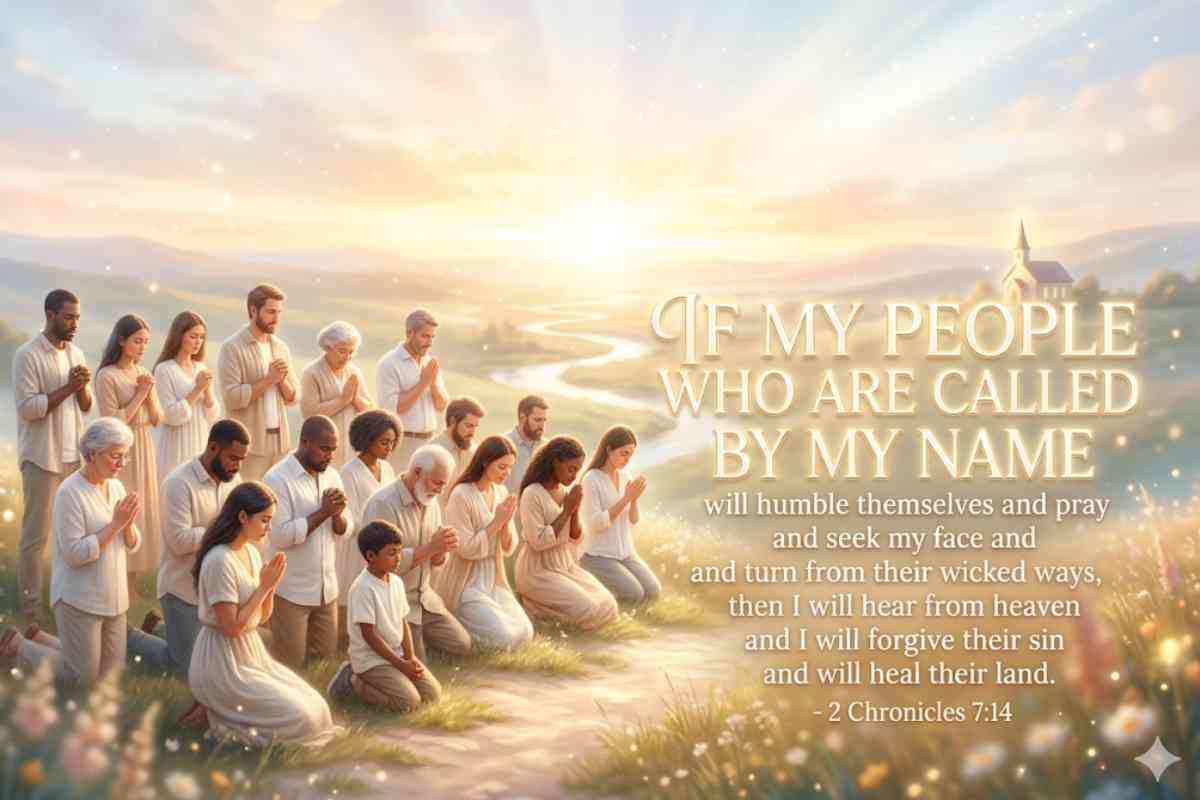


“If My People Who Are Called By My Name” (2 Chronicles 7:14) is a powerful biblical promise about humility, prayer, repentance, and restoration. It teaches that spiritual renewal begins with individuals turning back to God, leading to healing in personal life and society.
The phrase “If My People Who Are Called By My Name” is one of the most quoted and cherished promises in the Bible. Found in 2 Chronicles 7:14, it offers a clear pathway to spiritual renewal and divine restoration. Whether you’re seeking deeper faith, personal transformation, or guidance during difficult times, this verse provides timeless wisdom that remains relevant today.
What Does “If My People Who Are Called By My Name” Mean?
At its core, this verse is a conditional promise. It outlines four key actions believers must take:
“If my people, who are called by my name, will humble themselves and pray and seek my face and turn from their wicked ways…”
Key Elements Explained
| Phrase | Meaning |
| My People | Those who belong to God (believers) |
| Called by My Name | Identified with God’s identity and purpose |
| Humble Themselves | Let go of pride and self-dependence |
| Pray | Communicate sincerely with God |
| Seek My Face | Desire a close relationship with God |
| Turn from Wicked Ways | Repent and change behavior |
Outcome:
“Then I will hear from heaven, forgive their sin and heal their land.”
Historical and Biblical Context
This verse was spoken to King Solomon after the dedication of the temple. At that time:
- Israel had just built a sacred place for worship
- God was establishing a covenant relationship with His people
- The promise was tied to national obedience and faithfulness
Why Context Matters
Understanding the original context helps avoid misinterpretation:
- It was initially directed to Israel as a nation
- However, its principles apply universally to spiritual life and personal growth
Life-Changing Lessons from “If My People Who Are Called By My Name”
| Lesson | Core Principle | What It Teaches | Practical Application | Real-Life Impact |
| Humility Comes First | Let go of pride | True growth begins when we admit we don’t have all the answers | Practice self-reflection daily; accept feedback | Better relationships, reduced ego conflicts |
| Power of Prayer | Consistent communication | Prayer builds connection and inner strength | Set a daily prayer routine (5–15 mins) | Mental clarity, emotional peace |
| Seek a Deeper Relationship | Beyond rituals | Faith is about connection, not just tradition | Read scripture, meditate, reflect | Stronger sense of purpose |
| Repentance Brings Change | Turn away from wrong actions | Real transformation requires behavioral change | Identify and replace negative habits | Personal growth and discipline |
| Responsibility Starts Within | Change begins personally | Don’t wait for others to change first | Focus on self-improvement | Greater control over life outcomes |
| Consistency Matters | Daily commitment | Small daily actions lead to big transformation | Build habits, track progress | Long-term success and stability |
| Healing Is Holistic | Mind, heart, and life | “Heal their land” includes emotional and spiritual healing | Work on mental health and faith together | Inner peace and resilience |
| Faith Requires Action | Not just belief | Belief without action has limited impact | Combine prayer with real-life effort | Tangible results and growth |
| Patience in Process | Trust the journey | Change doesn’t happen overnight | Stay consistent even without immediate results | Stronger faith and perseverance |
| Collective Impact | Community matters | Personal change influences society | Encourage family/community prayer | Positive social environment |
Step-by-Step Application in Daily Life

- Practice Humility Daily
- Acknowledge limitations
- Avoid ego-driven decisions
- Stay open to learning
Example: Accepting mistakes instead of blaming others
- Build a Consistent Prayer Routine
- Set aside 5–15 minutes daily
- Speak honestly, not perfectly
- Include gratitude and requests
- Seek God Beyond Rituals
- Read scripture regularly
- Reflect and meditate
- Focus on relationship, not just religion
- Turn Away from Negative Patterns
- Identify harmful habits
- Replace them with positive actions
- Seek accountability if needed
Benefits of Following This Principle
| Benefit | Explanation |
| Inner Peace | Reduced anxiety through surrender |
| Clarity | Better decision-making |
| Emotional Healing | Letting go of guilt and stress |
| Stronger Faith | Deeper spiritual connection |
| Positive Influence | Impact others through transformation |
Country-Wise Interest & Faith Engagement
| Country | Daily Prayer Rate / Engagement | Key Insight | Resource Link |
| Indonesia | ~95% | Highest global prayer participation; faith deeply integrated into daily life | View Global Prayer Data |
| Nigeria | ~84% | Strong Christian & Muslim devotion; among top faith-sharing nations | See Prayer Trends Report |
| Kenya | ~84% | One of the highest faith-sharing cultures globally | Explore Research Study |
| Philippines | ~79% | Predominantly Christian; strong family-based prayer culture | View Country Data |
| India | ~71% | Diverse religions; over 1 billion people engage in prayer regularly | See Global Religious Study |
| Brazil | ~76% | High prayer levels despite shifting religious affiliations | Read Regional Trends |
| United States | ~44% | Moderate engagement; diverse religious landscape | View Pew Research Insights |
| South Africa | ~63% | Strong Christian base; high spiritual activity | Explore Global Data |
| Turkey | ~63% | Religion plays a central role in cultural identity | View Prayer Statistics |
| United Kingdom | ~21% | Increasing secularism; lower daily prayer rates | See Religious Trends Study |
Common Mistakes to Avoid
Treating It Like a Quick Fix
Many assume this verse guarantees instant results.
Why it’s a mistake:
Spiritual transformation is a process, not a one-time action.
What to do instead:
- Commit to consistency in prayer and humility
- Focus on long-term growth, not immediate outcomes
Skipping the First Step: Humility
People often jump straight to prayer without addressing pride.
Why it matters:
Humility is the foundation of the entire promise.
Fix:
- Practice self-reflection daily
- Accept correction without defensiveness
Praying Without Real Intent
Repeating words without sincerity weakens the impact.
Why it’s ineffective:
The verse emphasizes heart-driven prayer, not routine recitation.
Better approach:
- Speak honestly and personally
- Focus on connection, not perfection
Ignoring “Turn From Their Wicked Ways”
This is one of the most overlooked parts of the verse.
Common issue:
People pray but don’t change their actions.
Solution:
- Identify harmful habits
- Take practical steps to change behavior
- Replace negative patterns with positive ones
Focusing Only on Personal Gain
Some interpret the verse as a way to receive blessings only.
Reality:
The message is about transformation, not just rewards.
Shift your mindset:
- Seek growth, not just outcomes
- Focus on alignment with God’s will
Comparison: Passive Faith vs Active Faith
| Passive Faith | Active Faith |
| Waits for change | Takes action |
| Avoids responsibility | Accepts accountability |
| Prays occasionally | Prays consistently |
| Ignores self-reflection | Practices repentance |
Practical Example (Case Study Style)
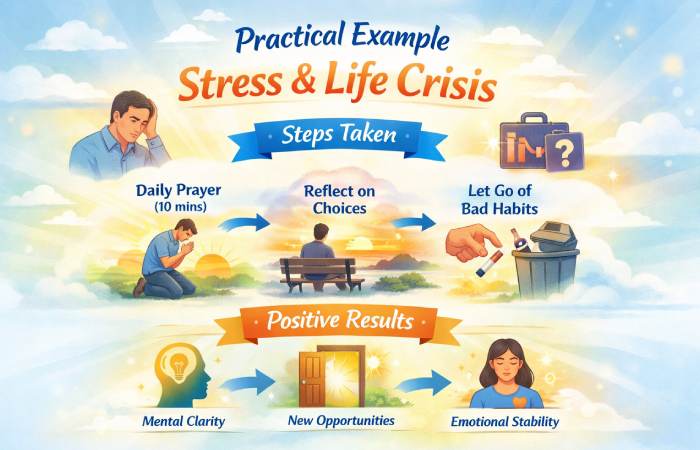
Scenario: Stress & Life Crisis
A person facing job loss begins:
- Daily prayer (10 mins)
- Reflecting on personal choices
- Letting go of harmful habits
Result:
- Improved mental clarity
- New opportunities
- Emotional stability
FAQs
- What is the main message of “If My People Who Are Called By My Name”?
It emphasizes humility, prayer, repentance, and spiritual renewal leading to healing.
- Is this promise only for Israel?
Originally yes, but its principles apply to all believers today.
- How can I apply this verse in daily life?
Practice humility, pray consistently, seek God, and turn away from negative behaviors.
- Does “heal their land” mean physical healing?
It can mean spiritual, emotional, societal, or even physical restoration depending on context.
- Why is humility the first step?
Because pride blocks growth, while humility opens the door to transformation.
Final Conclusion
“If My People Who Are Called By My Name” is more than just a verse—it is a transformational blueprint for personal and spiritual renewal. By embracing humility, consistent prayer, sincere seeking, and genuine repentance, anyone can experience profound change. In a world full of uncertainty, this timeless promise reminds us that healing begins within—and through faith, restoration is always possible.
Kashifa Jafar is a health, wellness and lifestyle writer at TheSparkShops with 4+ years of experience in content writing and digital publishing. She covers healthy living, wellness, food, natural beauty, organic products, sustainable living and everyday lifestyle topics in a clear and reader-friendly format.
Sameena Begum is a health, wellness and lifestyle content reviewer at TheSparkShops with 8 years of editorial experience. She reviews selected content for clarity, readability, organisation, consistency and overall editorial quality.