
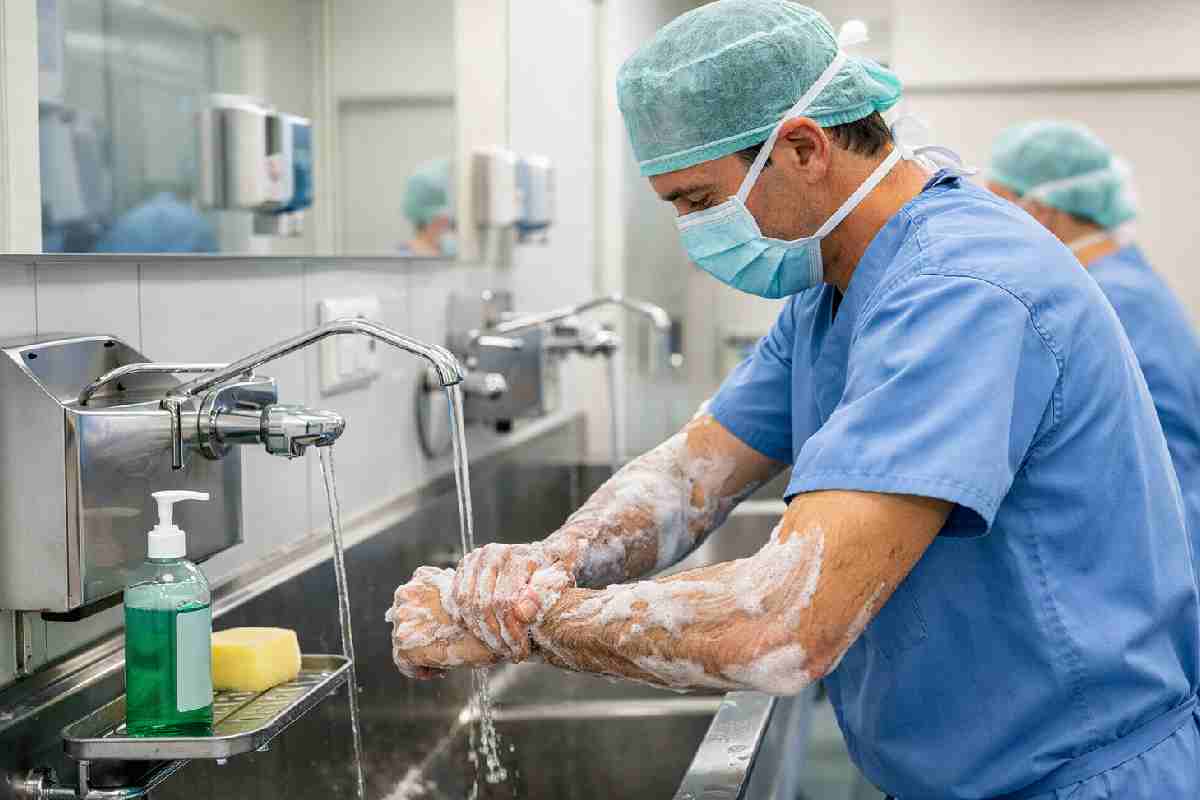


Maintaining sterile conditions in the operating room is essential to prevent infections during surgery. One of the most critical infection-control practices in healthcare is surgical hand washing, also known as surgical hand scrubbing.
Before any surgical procedure begins, surgeons and medical staff must perform a thorough hand scrub to remove microorganisms from the hands and forearms. This process significantly reduces the risk of surgical site infections and ensures patient safety.
This guide explains the correct surgical hand washing steps, recommended techniques, and best practices used in hospitals worldwide.
What Is Surgical Hand Washing?
Surgical hand washing is a specialized hygiene procedure performed by surgeons, nurses, and operating room staff before surgical procedures. The process involves scrubbing the hands and forearms with antiseptic agents to eliminate microorganisms that could contaminate sterile surgical fields.
Unlike regular hand washing, surgical scrubbing is more intensive and follows strict guidelines designed to maintain sterile conditions during surgery.
Proper patient care involves paying attention to different aspects of health, including hearing. Learn more about HearZap Smart Hearing and the importance of hearing health.
Why Surgical Hand Washing Is Important
The human skin naturally contains millions of microorganisms. While many are harmless, some can cause serious infections if they enter surgical wounds.
Surgical hand washing helps to:
- Remove dirt and debris from the skin
- Reduce bacterial populations
- Prevent contamination of surgical instruments
- Lower the risk of surgical site infections
- Protect both patients and healthcare workers
Studies have shown that proper surgical scrubbing dramatically reduces infection rates in operating rooms.
Good hygiene practices extend beyond clinical settings and include everyday oral care. Discover how daily habits influence dental hygiene to understand the importance of maintaining a consistent dental care routine.
Materials Required for Surgical Hand Washing
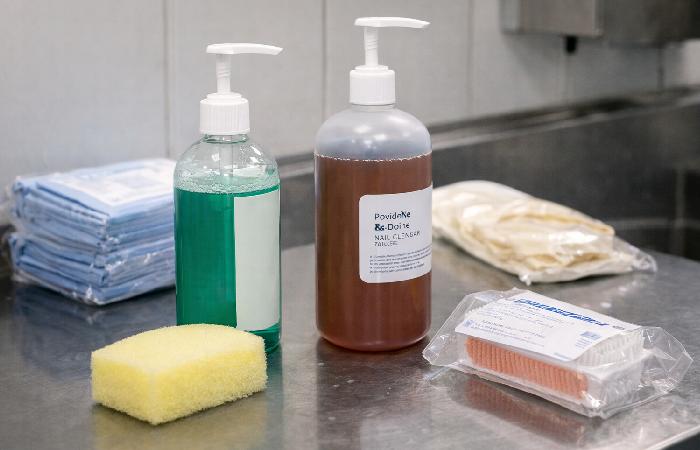
Healthcare facilities typically provide specific materials for surgical hand scrubbing.
Common items include:
- Antiseptic scrub solution (chlorhexidine or povidone iodine)
- Sterile nail cleaner
- Sterile scrub brush or sponge
- Running water
- Sterile towels
- Sterile surgical gloves
Each item plays an important role in maintaining sterile conditions during the procedure.
Choosing an appropriate healthcare provider is another important aspect of patient safety. Explore the benefits and considerations of private medical care when learning about healthcare options.
Preparation Before Surgical Hand Scrub
| Step | Preparation Action | Purpose |
| 1 | Remove all jewelry such as rings, watches, and bracelets | Prevents microorganisms from hiding under jewelry and ensures proper cleaning |
| 2 | Keep fingernails short and clean | Reduces bacterial growth under long nails |
| 3 | Remove nail polish or artificial nails | Artificial nails and polish can harbor harmful bacteria |
| 4 | Cover cuts or abrasions with waterproof dressing | Protects open skin and prevents contamination |
| 5 | Wear appropriate surgical attire (cap, mask, gown) | Maintains sterile operating room environment |
| 6 | Check availability of surgical scrub materials | Ensures antiseptic solution, sterile brush, and towels are ready |
| 7 | Turn on running water and adjust temperature | Allows comfortable and continuous hand washing |
| 8 | Position hands above elbows before scrubbing | Prevents contaminated water from flowing back to the hands |
These preparation steps help ensure that the surgical hand scrub procedure is effective and maintains proper infection control standards in the operating room.
Healthcare facilities can also consider environmental responsibility alongside hygiene and safety. Learn more about lab sustainability and approaches to making laboratory practices more environmentally conscious.
Surgical Hand Washing Steps (Step-by-Step)
Below are the standard steps followed in most hospitals.
Remove Jewelry and Inspect Hands
All jewelry must be removed before scrubbing because microorganisms can accumulate underneath rings and bracelets. Inspect the hands and forearms for cuts or skin conditions.
Initial Hand Wash
Begin by washing hands and forearms with regular soap and water.
This preliminary wash removes visible dirt and reduces the number of surface bacteria before the antiseptic scrub begins.
Apply Antiseptic Solution
Apply the surgical antiseptic solution to your hands and forearms.
Common antiseptics include:
- Chlorhexidine gluconate
- Povidone iodine
These agents kill bacteria and inhibit microbial growth.
Scrub Fingernails and Fingers
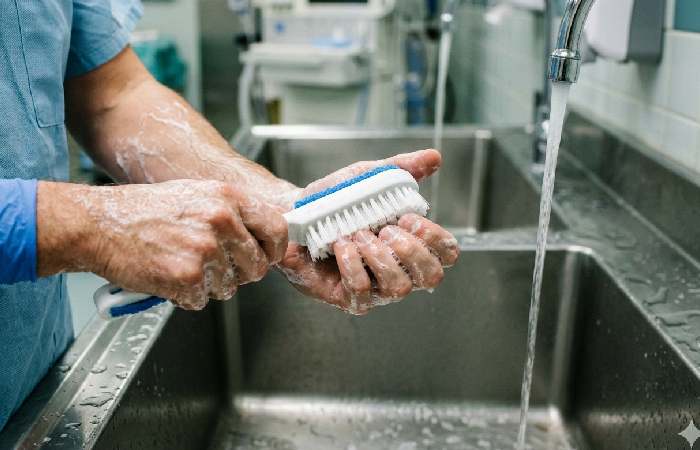
Use a sterile nail cleaner to remove debris under the fingernails.
Then scrub each finger individually:
- Start with the fingertips
- Clean between fingers
- Scrub the sides and backs of fingers
Fingertips are the most contaminated areas and require careful cleaning.
- Scrub Hands and Forearms
Continue scrubbing the palms, backs of hands, and wrists.
Then scrub the forearms up to the elbows using circular motions.
Each section of the arm should be cleaned thoroughly to eliminate bacteria.
Rinse Properly
Rinse hands and arms under running water.
Important rules:
- Always rinse from fingertips toward elbows
- Keep hands higher than elbows
- Avoid touching the sink
This technique prevents contaminated water from flowing back to the hands.
Dry Hands Using Sterile Technique
Use a sterile towel to dry hands and arms.
Follow these steps:
- Pat dry without rubbing
- Dry one hand and arm first
- Use the other end of the towel for the second arm
This prevents cross-contamination.
Wear Sterile Surgical Gloves
Once hands are completely dry, sterile gloves are worn using the closed gloving technique.
Gloves maintain sterility during the surgical procedure.
Maintaining oral hygiene is important for people undergoing orthodontic treatment as well. Read about dental aligners to learn more about this teeth-straightening option and its oral care considerations.
Recommended Duration of Surgical Hand Scrub
The time required for surgical hand washing depends on hospital protocol.
Typical durations include:
| Scrub Type | Duration |
| First scrub of the day | 5 minutes |
| Subsequent scrubs | 2–3 minutes |
| Alcohol-based surgical rub | 1.5–3 minutes |
Proper timing ensures adequate microbial reduction.
Creating a safe and comfortable environment is important for infant care. Parents can also explore these baby sleeping beds when researching sleep arrangements for their little ones.
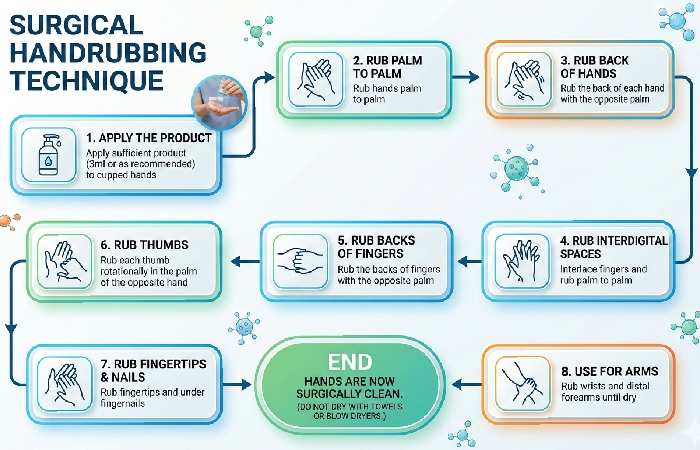
Surgical Handrubbing Technique (Step-by-Step)
| Step | Technique | Purpose | Recommended Duration |
| 1 | Apply alcohol-based surgical hand rub to dry hands and forearms | Ensures antiseptic covers all areas of the skin | Few seconds |
| 2 | Rub palms together thoroughly | Spreads antiseptic evenly across palms | 10–15 seconds |
| 3 | Rub right palm over left dorsum with interlaced fingers and vice versa | Cleans the back of the hands and between fingers | 10 seconds |
| 4 | Rub palm to palm with fingers interlaced | Removes microorganisms between fingers | 10 seconds |
| 5 | Rub backs of fingers against opposing palms with fingers interlocked | Cleans knuckles and finger joints | 10 seconds |
| 6 | Rotational rubbing of thumbs in opposite palms | Ensures thumbs are properly disinfected | 10 seconds |
| 7 | Rotational rubbing of fingertips in the opposite palm | Cleans under fingernails where bacteria accumulate | 10 seconds |
| 8 | Rub hands and forearms up to elbows using circular motion | Ensures complete antiseptic coverage for surgical preparation | 30–60 seconds |
| 9 | Continue rubbing until hands and forearms are completely dry | Allows antiseptic to work effectively | Until dry |
Total recommended time: Approximately 1.5–3 minutes depending on hospital or WHO guidelines.
Antiseptic Solutions Used in Surgical Hand Washing
Two antiseptics are most commonly used in surgical scrubbing.
Chlorhexidine Gluconate
- Long-lasting antimicrobial effect
- Highly effective against bacteria
- Widely used in hospitals
Povidone Iodine
- Broad antimicrobial spectrum
- Effective against bacteria and viruses
- Traditional surgical antiseptic
Some hospitals also use alcohol-based surgical hand rubs.
Difference Between Surgical Hand Washing and Medical Hand Washing
| Feature | Medical Hand Wash | Surgical Hand Wash |
| Purpose | General hygiene | Pre-surgical sterilization |
| Duration | 20–40 seconds | 2–5 minutes |
| Area cleaned | Hands only | Hands and forearms |
| Products | Soap | Antiseptic solutions |
| Environment | Clinics and hospitals | Operating rooms |
Surgical scrubbing is far more thorough and follows strict infection-control standards.
Surgical Hand Products
| Product | Type | Key Ingredient | Approx Price | Rating | Resource Link |
| Molnlycke Hibiclens Antiseptic Antimicrobial Skin Cleanser | Surgical scrub cleanser | Chlorhexidine Gluconate 4% | ₹1,194 | 4.2/5 | https://www.infectioncontrolproducts.com/products/surgical-scrub-hibiclens-4-strength-chg-chlorhexidine-gluconate |
| 3M Avagard CHG Handrub Antiseptic Solution | Alcohol-based surgical hand rub | Chlorhexidine + Alcohol | ₹389 | 4.6/5 | https://www.3m.com/3M/en_US/p/d/v000058319/ |
| Microshield Surgical Handwash 500ml | Surgical hand scrub | Chlorhexidine Gluconate 4% | ₹468 | — | https://www.medpick.in/product/schuelke-microshield-4-chlorhexidine-surgical-handwash |
| Betadine 7.5% Surgical Scrub | Antiseptic surgical scrub | Povidone-Iodine | ₹87 | — | https://www.betadine.com |
| Sterillium Hand Rub | Alcohol surgical hand rub | Ethanol + Propanol | ₹130 | — | https://www.hartmann.info |
| Surgiscrub 500ml | Surgical scrub | Chlorhexidine Gluconate 4% | ₹206 | — | https://www.truemeds.in/medicine/surgiscrub-4-liquid-500-ml-tm-lint1-000266 |
| Hexigard 400 Surgical Scrub | Surgical hand wash | Chlorhexidine 4% | ₹250–₹400 | — | https://handrub.in/product/surgical-scrub-hexigard-400/ |
| Hygin-X Surgical Scrub | Surgical antiseptic | Chlorhexidine 4% | ₹300–₹500 | — | https://icmpharma.com/product/hygin-x-surgical-scrub/ |
Note: Many surgical scrubs use 4% chlorhexidine gluconate, which provides strong antimicrobial protection and is widely used for pre-operative hand disinfection.
Common Mistakes During Surgical Hand Washing
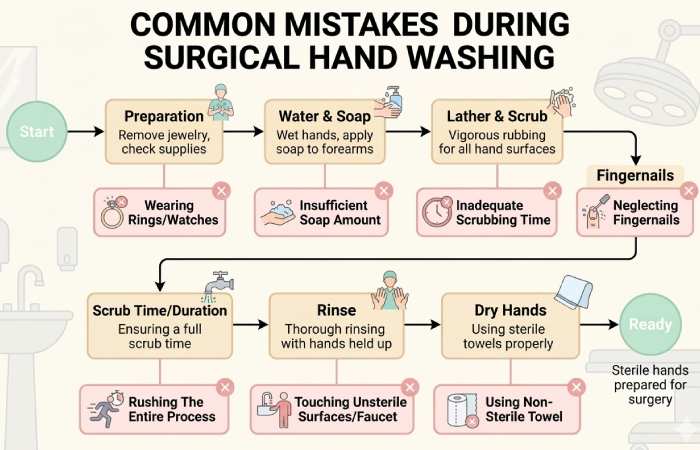
Practical Tips for Effective Surgical Hand Hygiene
Healthcare professionals can improve hand hygiene by following these tips:
- Follow WHO or hospital guidelines
- Use correct scrubbing duration
- Clean all hand surfaces thoroughly
- Keep nails short and free of polish
- Use sterile drying techniques
- Avoid touching non-sterile objects after scrubbing
Consistency in these practices ensures maximum infection prevention.
FAQ
What are the steps of surgical hand washing?
Surgical hand washing includes removing jewelry, washing hands, scrubbing nails and fingers with antiseptic solution, cleaning hands and forearms, rinsing from fingertips to elbows, drying with sterile towels, and wearing sterile gloves.
How long should surgical hand washing take?
The first surgical scrub usually takes about 5 minutes, while subsequent scrubs typically take 2–3 minutes depending on hospital guidelines.
What antiseptic is used for surgical hand washing?
Common antiseptics include chlorhexidine gluconate, povidone iodine, and alcohol-based surgical hand rubs.
Why is surgical hand washing important?
It removes microorganisms from the hands and forearms of surgical staff, significantly reducing the risk of surgical site infections.
What is the difference between surgical hand washing and regular hand washing?
Regular hand washing removes dirt and germs for daily hygiene, while surgical hand washing uses antiseptic scrubs and longer cleaning time to maintain sterile conditions before surgery.
Conclusion
Surgical hand washing is one of the most essential infection-control practices in healthcare and plays a critical role in maintaining a sterile operating environment. By carefully following the proper surgical hand washing steps—removing jewelry, performing an initial wash, scrubbing hands and forearms with antiseptic solutions, rinsing correctly, and drying with sterile technique—healthcare professionals can significantly reduce harmful microorganisms.
Kashifa Jafar is a health, wellness and lifestyle writer at TheSparkShops with 4+ years of experience in content writing and digital publishing. She covers healthy living, wellness, food, natural beauty, organic products, sustainable living and everyday lifestyle topics in a clear and reader-friendly format.
Sameena Begum is a health, wellness and lifestyle content reviewer at TheSparkShops with 8 years of editorial experience. She reviews selected content for clarity, readability, organisation, consistency and overall editorial quality.