
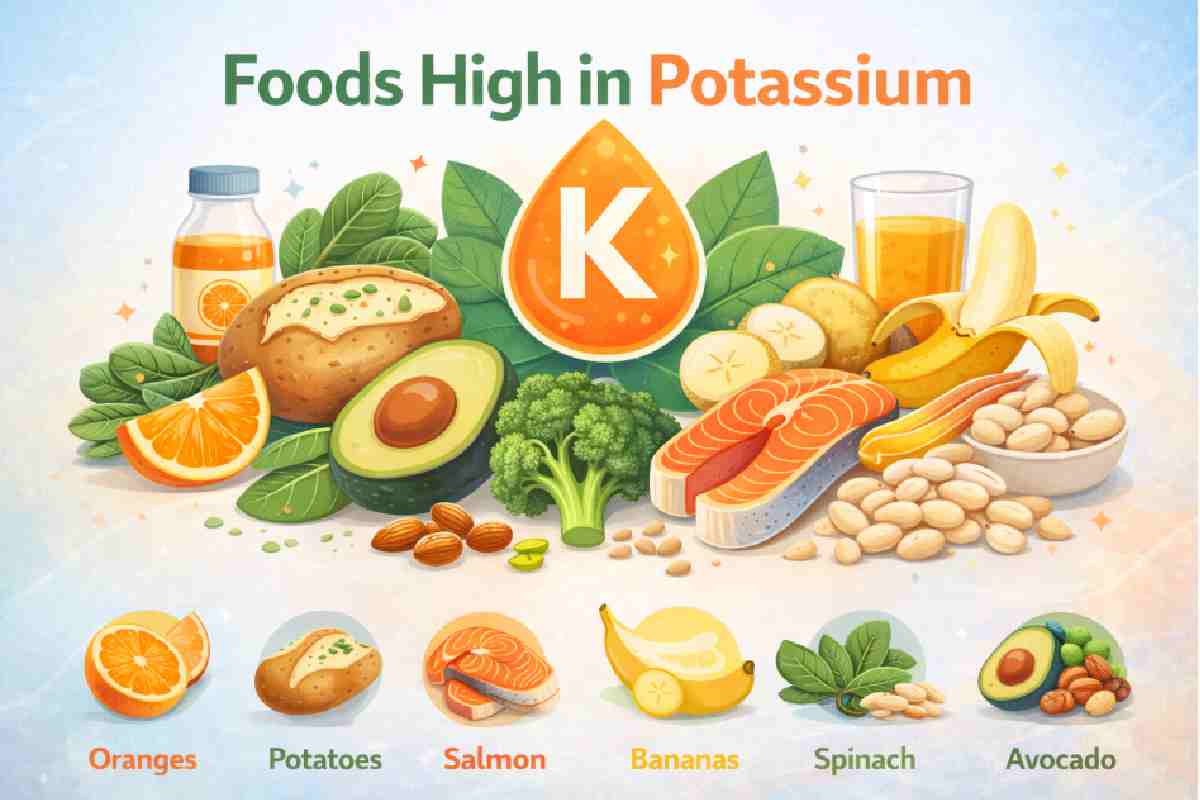
Potassium is a vital nutritional mineral and electrolyte that is important in ensuring normal body functions. It occurs naturally in numerous whole foods, particularly fruits, vegetables and legumes, dairy foods. Potassium should be regularly consumed in food unlike vitamins which can be stored in the body in large quantities and ensure that the body systems operate effectively.
Potassium is now widely disregarded as an essential component of the body in the fast-paced world even though it plays the essential role of muscle contraction, nerve communication, heart rhythm and fluid balance. Sufficient consumption of potassium will neutralize the adverse effects of a high amount of sodium, maintain cardiovascular health, and lower the chances of muscle cramps and fatigue. However, the world health agencies regularly declare that the majority of the population does not consume the recommended daily intake and one of the most prominent reasons is the contemporary eating habits.
What Is Potassium and Why It’s Essential
Potassium is a positively charged electrolyte, which assists in passing electrical impulses in the body. These signals enable movement of the muscles, nerves to transmit signals, and the heart to beat in a regular flow. It is also used in maintaining the fluid balance, both intracellular and extracellular.
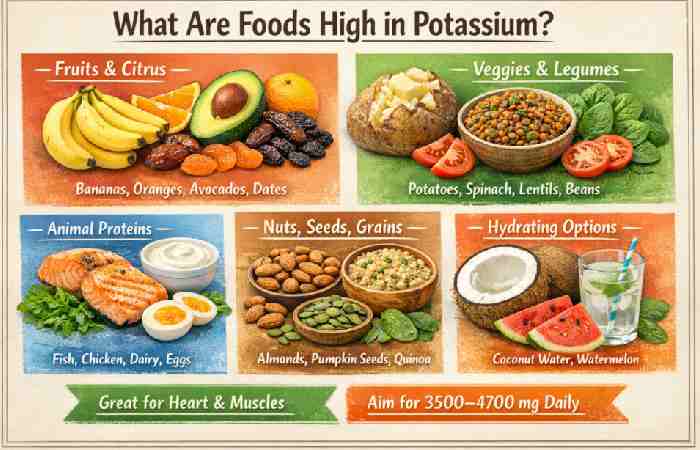
Key Functions of Potassium
| Function | How Potassium Helps |
| Muscle contraction | Enables muscles to contract and relax properly |
| Nerve signaling | Transmits nerve impulses throughout the body |
| Heart rhythm | Maintains normal heartbeat and prevents arrhythmias |
| Fluid balance | Regulates water balance within cells |
| Blood pressure control | Counteracts sodium to reduce hypertension risk |
Health Benefits of Potassium
| Health Benefit | Explanation |
| Supports Heart Health | Helps regulate heartbeat and reduces strain on the cardiovascular system |
| Lowers Blood Pressure | Balances sodium levels and relaxes blood vessel walls |
| Prevents Stroke | Reduces risk of stroke linked to high blood pressure |
| Improves Muscle Function | Essential for muscle contraction and prevents cramps |
| Supports Nerve Function | Enables proper nerve signal transmission |
| Maintains Fluid Balance | Regulates water balance inside and outside cells |
| Promotes Kidney Health | Helps kidneys remove excess sodium from the body |
| Strengthens Bones | Reduces calcium loss, improving bone density |
| Prevents Muscle Weakness | Maintains normal muscle strength and endurance |
| Supports Metabolism | Assists in converting nutrients into energy |
| Improves Digestive Health | Helps regulate muscle movements in the digestive tract |
| Reduces Risk of Kidney Stones | Decreases calcium buildup in urine |
Role of Potassium in the Body
Potassium is closely associated with sodium in maintaining electrolytes balance. Sodium attracts water outside the cells whereas potassium prevents water loss outside the cells hence maintaining cellular functions. Athletes, individuals not older than forty-five physically active, and older adults lose potassium through sweat or are less absorbed and thus are especially worth considering this balance.
Daily Recommended Intake (RDA)
The daily dietary requirements of potassium differ according to age, gender, and physical activity. Most health authorities emphasize on the intake of potassium in the form of natural foods and not supplements unless prescribed by a doctor.
Recommended Daily Potassium Intake
| Group | Recommended Intake (mg/day) |
| Adult men | 3,400 mg |
| Adult women | 2,600 mg |
| Athletes / physically active adults | 3,500–4,700 mg |
| Seniors (65+) | 2,600–3,400 mg |
| Pregnant women | ~2,900 mg |
Global Potassium Deficiency Trends
Potassium deficiency is prevalent all over the world despite its significance. According to studies, more than 70 percent of the adult population in the world engages in low intake of potassium compared to their recommended levels. Deficiency is prevalent in the areas in which high levels of refined grains, processed food, and high sodium diets are consumed.
Potassium Intake by Region
| Region | Average Intake | Status |
| North America | Low–Moderate | Below recommendations |
| Europe | Moderate | Slightly deficient |
| Asia | Low | High deficiency risk |
| Africa | Variable | Depends on food access |
| Mediterranean regions | Higher | Closer to ideal intake |
Why Modern Diets Often Lack Potassium
Potassium deficiency is prevalent all over the world despite its significance. According to studies, more than 70 percent of the adult population in the world engages in low intake of potassium compared to their recommended levels. Deficiency is prevalent in the areas in which high levels of refined grains, processed food, and high sodium diets are consumed.
Key Reasons for Low Potassium Intake
| Factor | Impact on Potassium Levels |
| Processed foods | High sodium, low potassium |
| Low fruit & vegetable intake | Reduced natural potassium sources |
| Busy lifestyles | Reliance on convenience foods |
| Soil depletion | Lower mineral content in produce |
| Poor dietary awareness | Underestimation of potassium needs |
What Are Foods High in Potassium?
Foods that contain large quantities of the mineral potassium per serving and are naturally high in the mineral are referred to as potassium-rich foods and are usually used as a significant source of your daily recommended intake. Potassium is also found in large quantities in most fruits, vegetables, legumes, dairy, and part of fish which play an important role in supporting muscle contractions, nerve impulses, fluid balance and heart rhythm.deficiency is prevalent all over the world despite its significance. According to studies, more than 70 percent of the adult population in the world engages in low intake of potassium compared to their recommended levels. Deficiency is prevalent in the areas in which high levels of refined grains, processed food, and high sodium diets are consumed.
| Food | Category | Potassium (mg per serving) |
| Banana (1 medium) | Fruit | ~420 mg |
| Avocado (½ medium) | Fruit | ~485 mg |
| Orange juice (1 cup) | Fruit | ~500 mg |
| Cantaloupe (1 cup) | Fruit | ~430 mg |
| Kiwi (1 cup) | Fruit | ~560 mg |
| Spinach (1 cup, cooked) | Vegetable | ~840 mg |
| Sweet potato (1 medium, baked) | Vegetable | ~540 mg |
| Potato (1 medium, with skin) | Vegetable | ~900 mg |
| Tomatoes (1 cup) | Vegetable | ~430 mg |
| Swiss chard (1 cup, cooked) | Vegetable | ~960 mg |
| Lentils (1 cup, cooked) | Legume | ~730 mg |
| Kidney beans (1 cup, cooked) | Legume | ~710 mg |
| Soybeans (1 cup, cooked) | Legume | ~970 mg |
| Yogurt (1 cup, plain) | Dairy | ~570 mg |
| Milk (1 cup) | Dairy | ~350 mg |
| Salmon (3 oz, cooked) | Fish | ~380 mg |
| Quinoa (1 cup, cooked) | Grain | ~320 mg |
| Almonds (1 oz) | Nuts | ~200 mg |
Natural vs Fortified Potassium Sources
Natural sources of potassium come directly from whole foods, while fortified sources are foods enhanced with added potassium during processing (e.g., some breakfast cereals or beverages). It typically have better overall nutrition (fiber, vitamins) compared with fortified versions, which may help meet targets when food access is limited.
| Type | Examples | Typical Benefit | Considerations |
| Natural | Bananas, avocados, potatoes, beans, spinach, fish | Provides potassium + other nutrients (fiber, protein, vitamins) | Higher overall nutrient profile |
| Fortified | Some cereals, sports drinks | Helps reach intake goals | May contain added sugars or sodium |
Bioavailability of Potassium from Plant vs Animal Foods
The absorption of potassium into and utilization in the body is known as bioavailability. The most prevalent sources of potassium are well absorbed, and fiber and food matrix may affect the rate of absorption.
| Source Type | Relative Bioavailability | Notes |
| Plant foods (e.g., spinach, beans) | ~60–85% | High fiber may modestly reduce absorption, but overall good bioavailability. |
| Animal foods (e.g., fish, dairy) | High | Often absorbed efficiently; less fiber influences absorption |
Potassium Content Comparison: 100g vs Serving
Below is a combined table of common high-potassium foods showing potassium per 100g, potassium per typical serving (~150–200g), and approximate % Daily Value (DV) based on a 3,500 mg daily target (common nutrition guideline).
| Food | Potassium (mg per 100g) | Potassium (mg per Serving) | % Daily Value (~3500 mg) |
| White beans | ~561 mg | ~841 mg (1 cup cooked) | ~24% |
| Cooked spinach | ~558 mg | ~961 mg (175g cooked) | ~27% |
| Sweet potato | ~337 mg | ~670 mg (136g cooked) | ~19% |
| Avocado | ~485 mg | ~975 mg (201g whole) | ~28% |
| Salmon (raw) | ~628 mg | ~967 mg (154g fillet) | ~28% |
| Baked potato (skin) | ~425 mg | ~1600 mg (299g large) | ~46% |
| Dried apricots | ~1163 mg | ~755 mg (½ cup) | ~22% |
| Banana | ~358 mg | ~422 mg (medium) | ~12% |
| Yogurt (plain) | ~255 mg | ~625 mg (245g cup) | ~18% |
| Broccoli (raw) | ~316 mg | ~475 mg (150g) | ~14% |
How Cooking & Processing Affect Potassium Levels
Potassium is also soluble in water, and therefore, cooking in water may decrease the content upon leaching away of the mineral. As an example, vegetable boiling can reduce potassium levels compared to steaming or roasting.
| Cooking Method | Impact on Potassium |
| Boiling + draining | Can reduce potassium significantly |
| Steaming | Better retention than boiling |
| Roasting / Baking | High retention (skin on) |
| Canning | Variable — may lose potassium to liquid |
Studies show boiled spinach may contain up to 17% less potassium than raw due to leaching.
Prices & Reviews for Popular Potassium-Rich Foods
And to assist you in making a selection of foods that are not only healthy, but also affordable and discussed by customers, here would be a preview of the common prices and overall opinion (prices are approximate; they are different in different regions):
| Food Item | Approx. Price (per kg) | Consumer Review Snapshot |
| Bananas | $1–$3/kg | Widely liked for convenience & taste; affordable potassium source. |
| Avocados | $3–$8/kg | Often rated excellent for taste & texture; pricier than bananas. |
| Sweet Potatoes | $1.5–$4/kg | Highly reviewed as versatile and nutrient-dense. |
| White Beans (dried) | $2–$5/kg | Consumers value them for fiber and protein content. |
| Salmon (fresh) | $10–$25/kg | High taste & nutrient reviews; higher price point. |
| Spinach | $2–$6/kg | Popular leafy green; some note wilting/cooking shrinkage. |
| Yogurt (plain) | $2–$5/kg | Good review for taste & versatility; protein plus potassium. |
| Dried Apricots | $6–$15/kg | Sweet snack; high sugar content noted by some reviewers. |
Pricing is indicative and varies by store, season, and region.
Sources
- Foods high in potassium — FoodyPage potassium list (avocado, sweet potatoes, spinach, banana, etc.).
- New Health Advisor potassium rankings (dried apricots, salmon, white beans, spinach, etc.).
- Healthline potassium foods details (white beans, potatoes, spinach, Swiss chard).
- NivaBupa potassium food values (potato, carrots, nuts, seeds, dairy).
- Potassium differences with cooking — mineral losses described.
Daily Potassium Requirements (Worldwide Standards)
There are minor differences in the amount of potassium that various countries recommend and health organizations recommend, but they all concur on one thing and that is, most individuals do not take the required amount of potassium to maintain optimal health. These recommendations are aimed at promoting the health of the heart, the muscle system, nerve signaling and fluid balance, as well as alleviating the adverse effects of a high sodium diet.
The table below provides a concise summary of the standards of potassium intake in the world, as well as the general, area-specific, and athlete-specific, and medical-specific recommendations.
Worldwide Daily Potassium Intake Standards
| Country / Organization | Recommended Daily Intake | Notes |
| WHO (Global) | 3,510 mg/day | Minimum intake to reduce CVD risk |
| USA (FDA / NASEM) | Men: 3,400 mg Women: 2,600 mg |
Adequate Intake (AI) |
| UK (NHS) | 3,500 mg/day | Adult recommendation |
| European Union (EFSA) | 3,500 mg/day | Aligns with WHO |
| Japan | ~3,000–3,500 mg/day | Diet traditionally potassium-rich |
| India (ICMR) | ~3,200 mg/day | Emphasizes food-based intake |
| Athletes | 3,500–4,700 mg/day | Depends on sweat loss & training |
| Medical supervision cases | Individualized | Especially for kidney conditions |
Sources
- World Health Organization (WHO) – Potassium intake guidelines
- U.S. FDA & National Academies of Sciences (NASEM) – Dietary Reference Intakes
- UK NHS – Vitamins and minerals guidance
- European Food Safety Authority (EFSA) – Dietary reference values
- Indian Council of Medical Research (ICMR) – Nutrient recommendations
- Harvard T.H. Chan School of Public Health – Potassium & health
Fruits High in Potassium
Fruits are the most readily available and natural potassium sources with the added advantage of fiber, antioxidants as well as hydration. Although bananas are commonly recognized as the poster fruit of potassium, some other fruits actually have the same or more. Knowing the actual amount of potassium is useful in helping you add variety to your food and satisfy daily requirements.
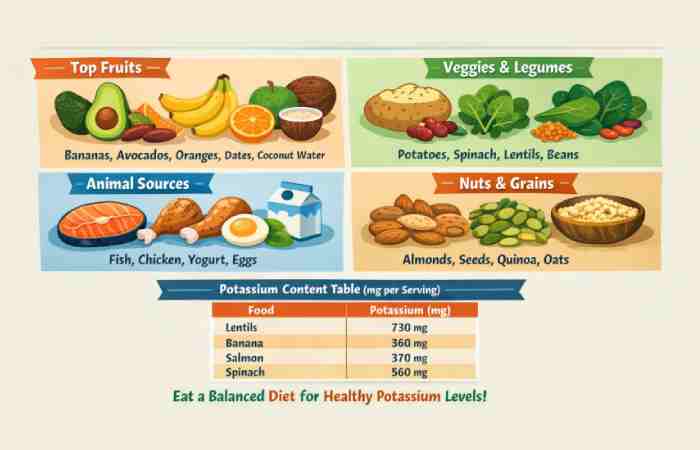
Fruits vs Potassium Content
| Fruit | Potassium (mg per 100g) | Potassium (mg per serving) | % Daily Value (~3,500 mg) |
| Banana | ~358 mg | ~422 mg (1 medium) | ~12% |
| Avocado | ~485 mg | ~975 mg (1 whole) | ~28% |
| Orange | ~181 mg | ~237 mg (1 medium) | ~7% |
| Orange juice | ~200 mg | ~500 mg (1 cup) | ~14% |
| Dates (dried) | ~656 mg | ~835 mg (5 dates) | ~24% |
| Apricots (dried) | ~1,160 mg | ~755 mg (½ cup) | ~22% |
| Raisins | ~749 mg | ~600 mg (½ cup) | ~17% |
| Coconut water | ~250 mg | ~600 mg (1 cup) | ~17% |
| Cantaloupe | ~267 mg | ~430 mg (1 cup) | ~12% |
| Honeydew melon | ~228 mg | ~388 mg (1 cup) | ~11% |
Country-Wise Potassium Food Plan with Prices & Reviews
Note: The values of potassium content are derived on composition data of health agencies such as USDA and Indian food composition sources. Pricing is based on reasonable retail or market prices of common foods in any of the regions- may change according to store and season.
1) India — Potassium Food Plan
| Food | Potassium Source | Price (approx.) | Potassium Strength / Review |
| Rajma (Kidney Beans, cooked) | ~1,324 mg/100g | ₹120–₹200/kg | Highly praised in Indian diets — heart-healthy + protein and potassium packed. |
| Sweet Potato | ~541 mg/medium | ₹30–₹60/kg | Affordable and versatile; often roasted/boiled. |
| Spinach | ~558 mg/100g | ₹40–₹100/kg | Popular leafy green — excellent with dals/curries. |
| Tomatoes | ~237 mg/100g | ₹25–₹60/kg | Staple in Indian kitchens, decent potassium boost. |
| Coconut water | ~250 mg/100 ml | ₹40–₹120/litre | Refreshing electrolyte drink (prices vary). |
| Dried Apricots | ~1,162 mg/100g | ₹400–₹800/kg | Good snack option; high potassium but more costly. |
| Oranges | ~181 mg/100g | ₹40–₹100/kg | Seasonal but well-reviewed for taste and potassium. |
2) United States — Potassium Food Plan
| Food | Potassium Source | Price (approx.) | Potassium Strength / Review |
| Baked Potato (with skin) | ~919 mg medium | $0.30–$0.60/potato | A top potassium pick — inexpensive, filling. |
| Salmon (fresh) | ~763 mg/fillet | $10–$25/lb | Highly reviewed for heart health & omega-3s. |
| Spinach (cooked) | ~636 mg/100g | $2–$5/bag | Tasty in salads or cooked; nutrient-rich. |
| White Beans | ~744 mg/100g (dried) | $1–$3/can | Cheap, versatile, high potassium. |
| Banana | ~358 mg/100g | $0.20–$0.35/banana | Popular and cheap potassium snack. |
| Yogurt (plain) | ~380 mg/cup | $3–$6/tub | Good for gut health + potassium. |
| Orange | ~237 mg/medium | $1–$2/fruit | Tangy, refreshing potassium boost. |
3) United Kingdom — Potassium Food Plan
| Food | Potassium Source | Price (approx.) | Potassium Strength / Review |
| Baked Potato (local) | Similar to U.S. potato | £0.20–£0.50 each | Easily available and inexpensive — high potassium. |
| Spinach | High in potassium | £1.50–£3/bag | Leafy greens are well liked in smoothies & cooked dishes. |
| Salmon | Potassium + omega-3 | £8–£18/kg | Highly rated, though more expensive than plant foods. |
| White Beans / Pulses | High potassium | £0.80–£2/can or pack | Budget-friendly choice. |
| Oranges | Citrus potassium | £1–£2/fruit | Great for snacks; seasonal pricing. |
| Yogurt | Dairy potassium | £1.50–£3 | A common breakfast item. |
| Coconut Water | Electrolyte drink | £2–£4/carton | Good as hydration + potassium source. |
Sources
- USDA FoodData Central dietary potassium information and typical food content values.
- Times of India local food potassium values (rajma, spinach, sweet potatoes, tomatoes).
- BulkMax Nutrition potassium food list.
- Nutritional potassium analysis showing foods with higher potassium than bananas.
Animal-Based Foods High in Potassium
Animal-based foods are not usually the top potassium sources compared to fruits and vegetables, but they play an important supporting role—especially because they also provide high-quality protein, vitamin B12, iron, calcium, and omega-3 fats. For athletes, older adults, and people on low-carb or high-protein diets, these foods can meaningfully contribute to daily potassium intake.
Animal-Based Potassium Sources
| Food | Potassium per Serving (mg) | Protein Content (g) |
| Salmon (baked, 100 g) | ~360–380 mg | ~22 g |
| Tuna (canned in water, 100 g) | ~240–260 mg | ~26 g |
| Cod (cooked, 100 g) | ~400–420 mg | ~20 g |
| Milk (1 cup / 240 ml) | ~350–380 mg | ~8 g |
| Yogurt, plain (1 cup) | ~380–420 mg | ~9–11 g |
| Kefir (1 cup) | ~380–400 mg | ~9 g |
| Chicken breast (roasted, 100 g) | ~250–270 mg | ~31 g |
| Turkey (roasted, 100 g) | ~240–260 mg | ~29 g |
| Beef (lean, cooked, 100 g) | ~300–330 mg | ~26 g |
| Pork (lean, cooked, 100 g) | ~350–370 mg | ~27 g |
| Egg (1 large) | ~60–70 mg | ~6 g |
Plant-Based & Vegan Potassium Sources
Vegetarian diets have a high concentration of potassium and are therefore very effective in fulfilling the daily needs as they also aid in heart health, digestion, and metabolic stability. Vegan sources of potassium are also commonly richer in potassium content per calorie than animal foods, as well as fiber, antioxidants and phytonutrient.
The list of the most powerful vegan sources of potassium power is well-structured below, and then the list of the sources provided by animals is compared.
Vegan Potassium Power Foods
| Food Category | Food | Potassium per Serving (mg) | Protein (g) | Key Benefits |
| Legumes & Pulses | Lentils (1 cup cooked) | ~730 mg | ~18 g | High protein, iron, fiber |
| Chickpeas (1 cup cooked) | ~475 mg | ~14 g | Blood sugar control | |
| Kidney beans (1 cup cooked) | ~610 mg | ~15 g | Heart health | |
| Black beans (1 cup cooked) | ~610 mg | ~15 g | Gut health | |
| Nuts & Seeds | Almonds (30 g) | ~200 mg | ~6 g | Healthy fats |
| Pistachios (30 g) | ~290 mg | ~6 g | Antioxidants | |
| Pumpkin seeds (30 g) | ~230 mg | ~8 g | Magnesium-rich | |
| Sunflower seeds (30 g) | ~240 mg | ~6 g | Vitamin E | |
| Whole Grains | Quinoa (1 cup cooked) | ~320 mg | ~8 g | Complete protein |
| Oats (1 cup cooked) | ~180 mg | ~6 g | Cholesterol control | |
| Brown rice (1 cup cooked) | ~150 mg | ~5 g | Energy support | |
| Plant-Based Milks | Soy milk (1 cup) | ~300 mg | ~7 g | Protein-rich |
| Almond milk (1 cup) | ~150–180 mg | ~1 g | Low-calorie | |
| Oat milk (1 cup) | ~350–390 mg | ~3 g | Naturally sweet | |
| Coconut milk beverage (1 cup) | ~250 mg | ~1 g | Hydration |
Why Vegan Foods Excel in Potassium
- Naturally low in sodium
- High potassium-to-calorie ratio
- Rich in fiber, improving mineral absorption
- Synergistic nutrients (magnesium, antioxidants)
Comparison: Vegan vs Animal Potassium Sources
| Aspect | Vegan Potassium Sources | Animal Potassium Sources |
| Average potassium per serving | High (500–1,000 mg common) | Moderate (200–400 mg) |
| Fiber content | High | None |
| Protein quality | Moderate–high (varies) | High (complete proteins) |
| Sodium content | Naturally low | Can be moderate–high |
| Heart health impact | Strong protective effect | Neutral–positive |
| Suitability for hypertension | Excellent | Moderate |
| Environmental impact | Low | Higher |
| Kidney-diet flexibility | Needs portion control | Needs portion control |
Foods High in Potassium by Diet Type
Different dietary patterns emphasize different food groups—but every major diet can meet potassium needs with the right choices. Below is a diet-wise comparison highlighting the best potassium-rich foods, along with short user-style reviews (taste, practicality, popularity) to help real-world decision-making.
Diet Type vs Best Potassium Foods (with Reviews)
| Diet Type | Best Potassium-Rich Foods | Why They Work | User Reviews (Global Consensus) |
| Vegetarian Diet | Bananas, spinach, lentils, yogurt, sweet potatoes | Mix of plant + dairy potassium, fiber, calcium | 5 “Easy to follow, filling, great energy levels” |
| Vegan Diet | Avocados, lentils, chickpeas, quinoa, coconut water, dates | Highest potassium density from plants, low sodium | 5“Excellent for blood pressure & digestion” |
| Keto / Low-Carb Diet | Avocados, spinach, mushrooms, salmon, nuts & seeds | Low-carb foods with high potassium-per-carb ratio | 5 “Prevents keto cramps when done right” |
| Mediterranean Diet | Olives, tomatoes, leafy greens, fish, yogurt, legumes | Balanced potassium + heart-healthy fats | 5 “Sustainable, heart-friendly, flavorful” |
| Indian Diet | Bananas, coconut water, dal, rajma, spinach (palak), curd | Naturally potassium-rich traditional foods | 5“Affordable and culturally easy to maintain” |
Diet-Specific Potassium Insights
Vegetarian Diet
- Strong potassium intake from fruits, legumes, dairy
- Yogurt and lentils help meet daily needs without supplements
- Ideal for people avoiding meat but wanting balanced nutrition
Vegan Diet
- One of the easiest diets to meet potassium goals
- Legumes + fruits + vegetables often exceed 3,500 mg/day
- Requires awareness for protein and B12, not potassium
Keto & Low-Carb Diet
- Potassium deficiency is common unless planned
- Avocados and leafy greens are essential
- Helps prevent muscle cramps and fatigue (“keto flu”)
Mediterranean Diet
- Naturally balances potassium and sodium
- High adherence rates due to taste and flexibility
- Strong evidence for heart health
Indian Diet
- Traditional meals are potassium-rich by default
- Dal, vegetables, fruits, and coconut water contribute steadily
- Modern processed-food shift can reduce intake if not careful
Which Diet Is Best for Potassium?
| Diet | Potassium Adequacy |
| Vegan | 5 (Excellent) |
| Mediterranean | 5(Excellent) |
| Indian (traditional) | 5 (Very good) |
| Vegetarian | 5 (Very good) |
| Keto / Low-carb | 5 (Needs planning) |
Pricing of Potassium-Rich Foods (Worldwide)
Here’s a comparative look at food prices for common potassium-rich items in the USA, India, and the UK, along with a rough “potassium per dollar” value to help you determine which foods give you the most potassium bang for your money.
Pricing Notes:
- Prices are approximate and based on typical retail/market costs as of 2025–2026.
- Potassium values are drawn from the USDA food composition data (e.g., baked potato ~531 mg/100 g and banana ~358 mg/100 g) and regional estimates.
- Potassium per dollar is a simple indicator (mg potassium ÷ approximate price) to help compare relative value.
Potassium Food Prices (USA, India, UK) & Potassium per Dollar
| Food Item | Avg. Price (USA) | Avg. Price (India) | Avg. Price (UK) | Potassium per Dollar (approx.) | Value Insight |
| Bananas | ~$1.68 /kg (~$0.76/lb) | ~₹60 /kg (~$0.72/kg) | ~£1.69 /kg (~$2.10/kg) | ~250–350 mg K/$ | Cheapest in India & USA; iconic potassium snack |
| Potatoes (white) | ~$1–$2 /kg (typical) | ~₹50 /kg (~$0.60/kg) | ~£1–£1.50 /kg (~$1.25–$1.85/kg) | ~400–700 mg K/$ | Excellent value across regions |
| Spinach (leafy greens) | ~$2–$4 /bag | ~₹80–₹120 /kg | ~£1.50–£3 /kg | ~300–500 mg K/$ | Good potassium + micronutrients |
| Sweet Potatoes | ~$2–$3 /kg | ~₹40–₹60 /kg | ~£2–£3 /kg | ~350–600 mg K/$ | Affordable, versatile |
| Milk (1 L) | ~$0.90–$1.20 | ~₹60 /L | ~£0.90–£1.50 | ~200–350 mg K/$ | Steady potassium + calcium |
| Salmon (fresh) | ~$6–$10 /100 g ∼ $60–$100/kg | may vary widely | ~£15–£25 /kg | ~150–300 mg K/$ | High nutrient food but pricey |
| Yogurt (plain) | ~$6–$8 /kg ∼ $0.60–$0.80/100 g | ~₹200–₹300 /kg | ~£3–£5 /kg | ~200–350 mg K/$ | Good mix of potassium + probiotics |
| Oranges | ~$2–$3 /kg | ~₹80 /kg | ~£2–£3 /kg | ~200–350 mg K/$ | Seasonal but versatile fruit |
Sources
- Potassium food content (e.g., potatoes, bananas, spinach, milk) — USDA FSRG Dietary Data Briefs.
• Food prices in India (bananas, potatoes, tomatoes, milk) — Numbeo cost of living data.
• Banana price comparisons (USA vs UK global pricing) — Numbeo global price rankings.
• Salmon price estimate (USA typical food forum pricing).
Nutrient Comparison Table
| Comparison | Potassium | Sodium | Magnesium | Electrolyte Drinks |
| Typical amount (mg) | 2,600–3,500 mg/day recommended | ≤2,300 mg/day limit | 310–420 mg/day | 100–400 mg potassium/serving |
| Primary role | Muscle contraction, heart rhythm, fluid balance | Fluid balance, nerve signaling | Muscle relaxation, enzyme function | Rapid hydration |
| Effect on blood pressure | Lowers BP | Raises BP when excessive | Supports BP control | Neutral to negative (if high sodium) |
| Main food sources | Fruits, vegetables, legumes, dairy | Salt, processed foods | Nuts, seeds, whole grains | Commercial beverages |
| Fiber content | High (from foods) | None | Moderate | None |
| Sugar content | None (natural foods) | None | None | Often high |
| Best for | Daily health & prevention | Short-term fluid needs | Muscle recovery & sleep | Endurance sports |
| Cost efficiency | High | Very high | Moderate | Low (costly per mg) |
Sources
- World Health Organization (WHO) – Sodium & Potassium Guidelines
- NIH Office of Dietary Supplements – Potassium & Magnesium Fact Sheets
- FDA Nutrition Labeling & Electrolyte Guidance
- Harvard T.H. Chan School of Public Health – Electrolytes & Heart Health
Conclusion
Potassium is one of the most essential yet under-consumed nutrients in modern diets. Throughout this guide, we’ve seen that potassium plays a vital role in muscle contraction, nerve signaling, heart rhythm regulation, blood pressure control, and fluid balance. The good news? Meeting your daily potassium needs doesn’t require supplements or expensive products—real, whole foods do the job best.
 About
About