
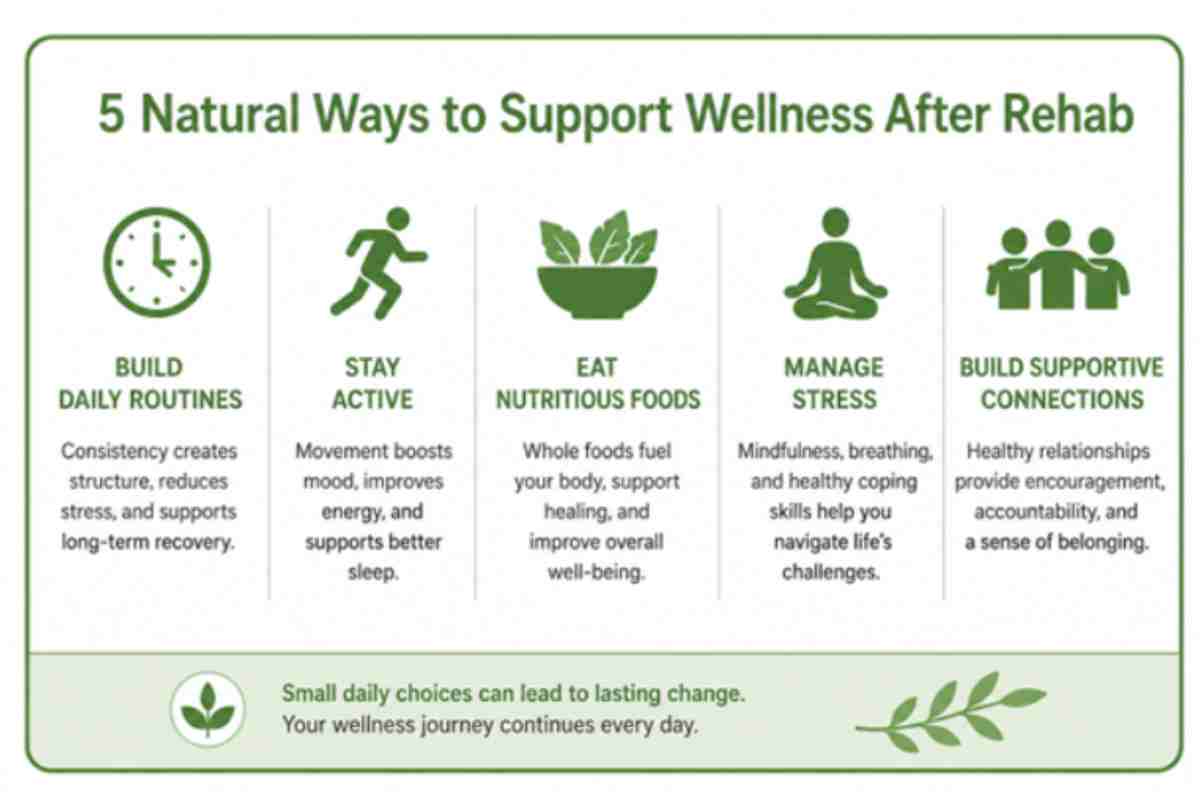
Completing a treatment program is a major accomplishment, but recovery does not end when a person leaves a facility. The weeks and months afterward often involve building routines that support physical health, emotional stability, and overall wellness. During active substance use, the body can experience nutritional deficiencies, disrupted sleep patterns, increased stress levels, and reduced physical fitness. Recovery provides an opportunity to rebuild those foundations.
Natural wellness strategies cannot replace medical care or counseling, but they can strengthen the progress made during treatment. Small daily habits often create meaningful improvements over time. Focusing on sleep, nutrition, exercise, stress management, and healthy social connections can help people feel stronger and more confident as they move forward.
Rebuilding Healthy Daily Routines
One of the most important aspects of recovery is creating structure. Substance use often disrupts schedules and daily responsibilities. Establishing consistent routines helps restore stability and reduces the likelihood of falling into unhealthy patterns.
Many people benefit from waking up and going to bed at the same time each day. Regular meal schedules can also help regulate energy levels and support better physical health. Even simple habits such as making the bed, preparing healthy meals, or taking a daily walk can reinforce a sense of accomplishment.
Recovery looks different for every individual. Some people return to work immediately, while others spend time focusing on health goals before resuming major responsibilities. Regardless of the path, consistency matters. The more predictable and healthy the routine becomes, the easier it can be to maintain momentum. For many people, recovery includes remembering lessons learned during treatment and applying them to everyday life. This remains true whether you were in a drug detox in Fort Worth, Los Angeles or D.C. The location may differ, but the need for healthy routines remains the same.
Supporting Physical Health Through Movement
Physical activity plays an important role in overall wellness after treatment. Exercise can help improve mood, support cardiovascular health, increase energy levels, and promote better sleep. It also provides a productive outlet for stress.
The goal does not need to be intense training or athletic performance. Walking, swimming, yoga, cycling, strength training, and stretching can all contribute to improved health. Many people find that starting with manageable goals makes it easier to stay consistent.
Movement can also help individuals reconnect with their bodies after periods of neglect or poor health. Paying attention to strength, flexibility, endurance, and physical comfort often creates a greater sense of awareness and self-care. Exercise may also encourage healthy social interaction when people participate in group fitness classes, hiking clubs, recreational sports, or other organized activities. Positive social engagement can be an important part of maintaining wellness over the long term.
Nutrition as a Foundation for Recovery
Food choices can have a significant impact on physical and mental well-being. During recovery, the body often benefits from nutrient-dense foods that provide vitamins, minerals, protein, healthy fats, and complex carbohydrates.
Many treatment professionals encourage individuals to focus on balanced meals rather than restrictive diets. Fruits, vegetables, lean proteins, legumes, nuts, seeds, and whole grains can help support energy production and overall health. Proper hydration is equally important and can affect everything from concentration to physical performance.
Many people discover that eating a whole foods diet that supports your body and overall wellness becomes easier when meals are planned in advance. Keeping healthy options available at home can reduce reliance on convenience foods and encourage more consistent eating habits.
Nutrition also influences sleep quality, energy levels, and mood regulation. While no specific food can guarantee success in recovery, healthy eating habits contribute to a stronger physical foundation that supports long-term goals.
Managing Stress in Healthy Ways
Stress is a normal part of life, but learning healthy responses to stress can make a meaningful difference after treatment. Many individuals develop new coping strategies during recovery that replace behaviors that may have been harmful in the past.
Meditation, deep breathing exercises, journaling, prayer, mindfulness practices, and spending time outdoors are common approaches. These activities can help people slow down, process emotions, and regain perspective during difficult moments.
Stress management is often most effective when practiced consistently rather than only during periods of crisis. Developing daily habits that promote relaxation can make it easier to navigate challenges when they arise. It is also important to recognize when additional support may be needed. Therapists, counselors, peer support groups, and healthcare professionals can provide valuable guidance when stress becomes overwhelming.
Maintaining a Long-Term Wellness Mindset
Recovery is not defined by perfection. Everyone experiences setbacks, difficult days, and unexpected challenges. What matters most is maintaining a commitment to personal growth and healthy choices. Long-term wellness often develops through small actions repeated over time. Prioritizing sleep, staying physically active, eating nutritious foods, managing stress, and maintaining supportive relationships can all contribute to a healthier future.
Natural health and wellness strategies can complement the work completed during treatment. By focusing on daily habits that support physical and emotional well-being, individuals can continue building a strong foundation for long-term recovery and overall health.
 About
About