
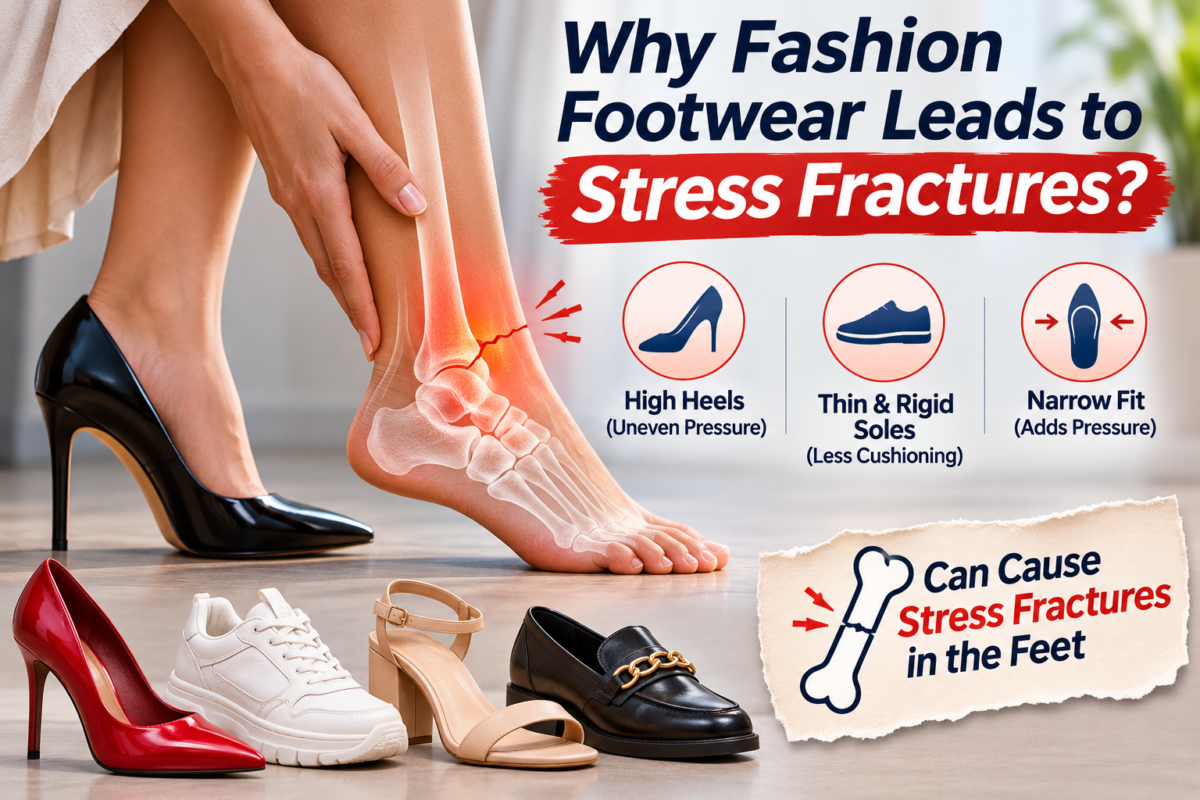


There is a moment most fashion lovers know well. You find the perfect pair of shoes. The heel is exactly right, the toe tapers beautifully, and they pull the whole outfit together in a way nothing else could. You wear them, and your feet remind you that beauty sometimes has a cost.
That cost is usually framed as temporary discomfort. What it less often gets framed as is a genuine injury risk. Stress fractures of the foot are more common in people who wear fashionable footwear than most realise, and they tend to show up gradually, in ways that are easy to dismiss until they are not.
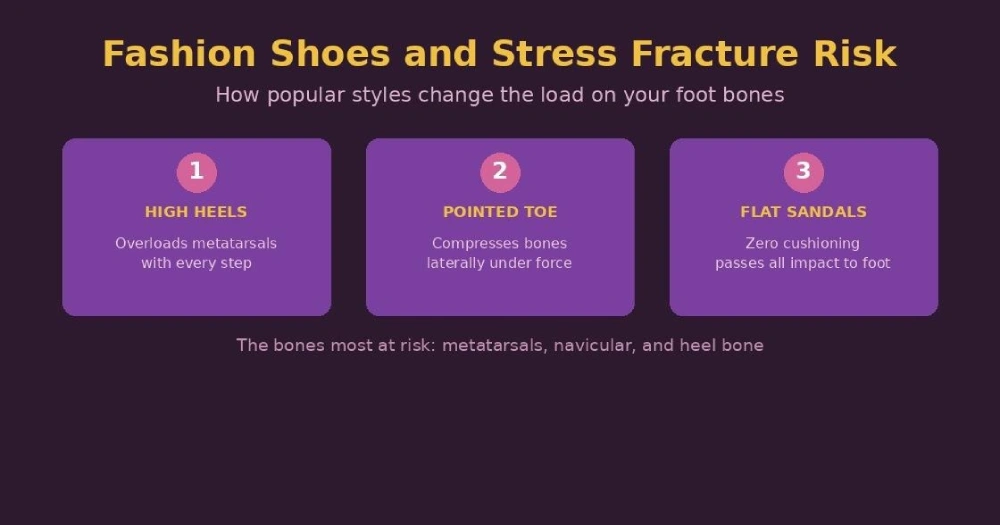
Three shoe styles most associated with stress fracture risk: high heels shift load onto the metatarsals, pointed toes compress bones laterally, and flat sandals pass impact directly to the foot with no cushioning.
What Shoes Actually Do to Your Foot Bones
The foot is a complex structure with 26 bones, 33 joints, and more than 100 muscles and tendons working together to absorb and distribute load. The footwear you choose changes how that load moves through the foot with every step you take. There are some shoe styles worth knowing about from a pure fashion perspective, but understanding what they do mechanically gives you a fuller picture of what you are choosing.
High heels shift your body weight forward onto the ball of the foot and the metatarsal bones, which are the long bones running from the midfoot to the toes. These bones are not designed to carry that kind of concentrated load for extended periods. Pointed toe boxes compress the forefoot laterally, pushing the bones together in ways that increase friction and stress. Flat sandals and ballet flats offer almost no cushioning between the foot and the ground, which means the full force of each step travels directly into the foot structure rather than being absorbed.
None of this is catastrophic in a single wearing. The problem is cumulative. Bone, like all tissue, adapts to load, but it needs recovery time to do so. When the load exceeds the bone’s ability to repair itself between uses, tiny cracks develop. Left unchecked, those cracks become stress fractures.
Which Foot Bones Are Most at Risk
Not all bones in the foot carry equal risk when it comes to fashionable footwear. The metatarsals, particularly the second and third, are the most commonly affected. They bear a disproportionate share of the load in heels and are the first to show signs of stress when the forefoot is overloaded.
The navicular, a small bone on the inner side of the midfoot, is another common site, particularly in people who wear flat shoes with no arch support for long periods of daily walking. The heel bone, or calcaneus, can also develop stress fractures, though this tends to be more associated with sudden increases in activity than with specific shoe styles.
The pattern that connects them: all of these fractures develop gradually, without a single traumatic event, and all of them are influenced by footwear that changes where and how load travels through the foot.
Recognising a Stress Fracture Early
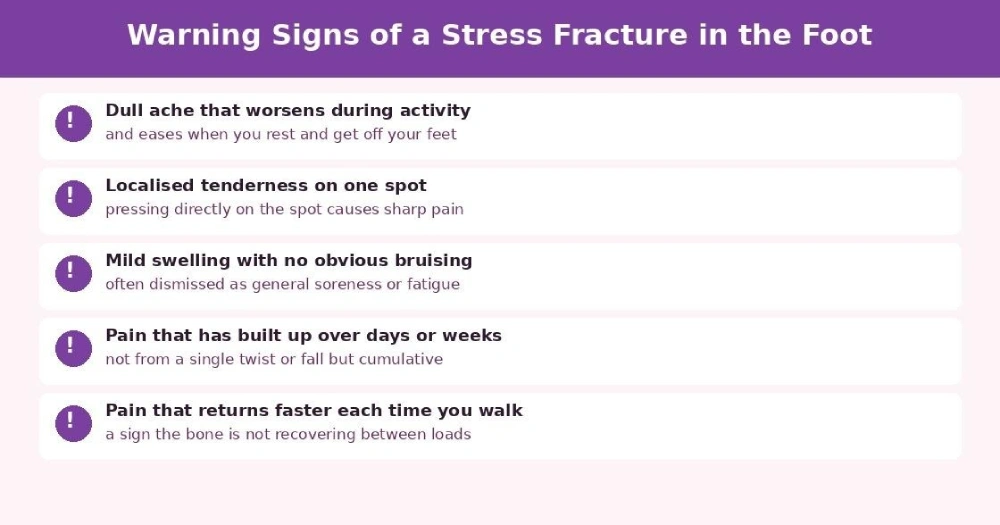
The early signs of a stress fracture are easy to attribute to something else. A dull ache that builds during the day and eases when you take your shoes off. A specific tender spot on the top of the foot that hurts when you press it. Mild swelling that you notice at the end of the day but that is gone by morning. Pain that returns a little sooner each time you wear a particular pair of shoes.
These signals matter because a stress fracture caught early is a very manageable injury. Rest, modified footwear, and reduced loading on the affected bone are usually sufficient. Left to progress, stress fractures can become complete fractures, requiring immobilisation, and in some cases surgical intervention.
Beaver Valley Foot Clinic provides a clear overview of how stress fractures in the foot are diagnosed and treated, including what imaging is typically needed and what recovery looks like depending on severity. If you are experiencing localised foot pain that fits the pattern above, that is worth reading before deciding whether to wait it out.
Five warning signs that a stress fracture may be developing: progressive aching during activity, a precise tender spot, day-end swelling, pain returning faster on each outing, and discomfort that shifts from shoe-related to constant.
What Happens If You Ignore It
The natural instinct is to push through foot pain, particularly when it seems shoe-related rather than injury-related. The logic is understandable: if it is just the shoes, it will go away when the shoes come off. And for the first few weeks of a developing stress fracture, that is more or less what happens.
But the bone is not recovering between wearings if the loading pattern continues. Each time you put on the shoes that are creating the problem, you are adding to the cumulative damage. The fracture line extends a little further. The recovery window narrows. By the time the pain is consistent enough to take seriously, the injury is significantly more involved than it was when it first appeared.
A complete fracture of a metatarsal, which is what a neglected stress fracture can become, typically requires a walking boot and four to six weeks of restricted activity. Some cases need surgical fixation. The difference between catching it at three weeks and catching it at three months is substantial.
Smarter Shoe Choices Without Giving Up Style
The goal is not to abandon fashion footwear entirely. It is to make more intentional choices about how and when you wear it, and to build in enough variety that no single shoe style dominates the load on your feet. Health and wellness choices extend into the wardrobe more than most people consider, and footwear is one of the clearest examples.
Rotating between shoe styles across the week means no single load pattern repeats every day. Wearing heels for specific occasions rather than as everyday footwear gives your metatarsals time to recover. Prioritising fit over aesthetic when buying everyday shoes reduces the cumulative wear on forefoot structures. Insoles with metatarsal support can redistribute load in styles that concentrate pressure on the ball of the foot.
If you have a pair of shoes that reliably causes foot pain during or after wearing, that is information worth acting on rather than accepting. Persistent pain from a specific shoe is not normal break-in discomfort. It is the foot telling you that something in the structure of that shoe does not work for your foot mechanics.
The Bottom Line
Stress fractures from fashion footwear are real, they are common, and they are almost entirely preventable with a small amount of attention to what your feet are telling you. The early signs are subtle enough that most people miss them. The consequences of missing them are significant enough that they are worth looking for.
You do not have to choose between style and foot health. You do have to pay enough attention to know when one is starting to cost the other.
This article is for general informational purposes only and is not a substitute for professional medical advice. If you are experiencing persistent or worsening foot pain, please consult a qualified podiatrist or healthcare provider.
Kashifa Jafar is a health, wellness and lifestyle writer at TheSparkShops with 4+ years of experience in content writing and digital publishing. She covers healthy living, wellness, food, natural beauty, organic products, sustainable living and everyday lifestyle topics in a clear and reader-friendly format.
Sameena Begum is a health, wellness and lifestyle content reviewer at TheSparkShops with 8 years of editorial experience. She reviews selected content for clarity, readability, organisation, consistency and overall editorial quality.