BF film ceramic tint is a premium window tint known for heat rejection, UV protection, and durability. Prices vary widely depending on vehicle type, country, film quality, and installer expertise. Expect:
- India: ₹8,000 – ₹35,000
- USA: $250 – $900
- UAE: AED 500 – AED 2,500
Ceramic tint costs more than dyed or metallic films but offers superior performance and long-term value.
What Is BF Film Ceramic Tint?
BF film ceramic tint refers to a high-performance automotive window film (often marketed as “Best Film” or premium-grade ceramic film) that uses nano-ceramic technology to block heat, UV rays, and glare—without using metal or dyes.
Simple Definition
BF ceramic tint = advanced window film made with microscopic ceramic particles that block heat and UV while maintaining clear visibility.
How It Actually Works
Unlike old tints, ceramic films don’t rely on darkness alone.
- They contain nano-sized ceramic particles embedded in multiple film layers
- These particles filter infrared radiation (heat) while allowing visible light to pass through
- The film is non-metallic and non-conductive, so it doesn’t interfere with signals
In simple terms:
It blocks heat at a microscopic level, not just by making windows darker.
What Makes BF Ceramic Tint Different?
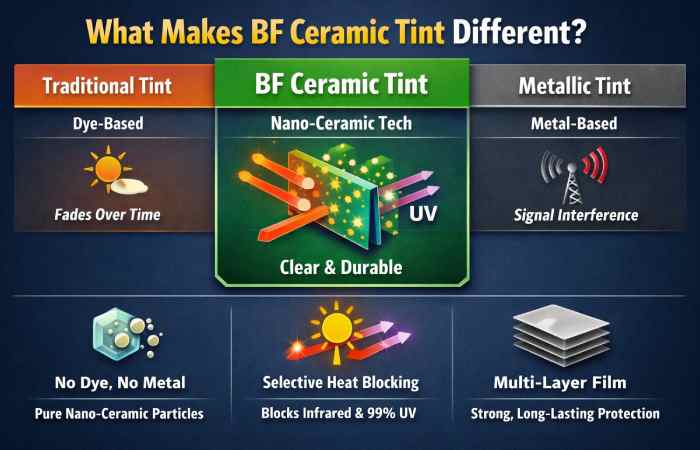
- No Dye, No Metal
- Traditional tint → uses dye (fades over time)
- Metallic tint → uses metal (blocks signals)
- Ceramic tint → uses nano-ceramic particles
Result: Better durability + no signal interference
- Selective Heat Blocking
Sunlight has 3 main components:
- Visible light (brightness)
- UV rays (damage)
- Infrared (heat)
Ceramic tint specifically targets:
- Infrared heat → blocked
- UV rays → blocked
- Visible light → controlled (based on tint level)
- High-Tech Multi-Layer Film
- Built with multiple layers infused with ceramic nanoparticles
- Particles are extremely small (nanometers), making the film:
- Clear
- Strong
- Heat-resistant
Key Features of BF Ceramic Tint
| Feature | Description | Benefit to User |
| Nano-Ceramic Technology | Uses microscopic ceramic particles embedded in the film | Advanced heat and UV blocking without affecting visibility |
| High Heat Rejection (IRR) | Blocks 50–90%+ infrared heat | Keeps car interiors significantly cooler |
| UV Protection | Blocks up to 99% harmful UV rays | Protects skin and prevents interior fading/cracking |
| Visible Light Control (VLT) | Available in different shades (5%–70%) | Customizable privacy and brightness |
| No Signal Interference | Non-metallic composition | GPS, mobile, and radio signals work normally |
| Glare Reduction | Reduces sunlight glare | Safer and more comfortable driving |
| High Clarity | No haze or distortion | Clear visibility even at night |
| Durability | Resistant to fading, bubbling, and peeling | Long lifespan (7–10 years) |
| Scratch Resistance | Strong outer coating layer | Better protection during cleaning and use |
| Energy Efficiency | Reduces AC workload | Improved fuel efficiency and comfort |
| Aesthetic Appeal | Sleek, premium finish | Enhances car appearance |
BF Film Ceramic Tint Price (Country-Wise Comparison)
India – BF Ceramic Tint Price
| Vehicle Type | Price Range (INR) | Quality Level | Resource Link |
| Hatchback | ₹8,000 – ₹15,000 | Basic–Mid Ceramic | View Price Guide |
| Sedan | ₹12,000 – ₹25,000 | Mid–Premium | Check Cost Insights |
| SUV | ₹18,000 – ₹35,000+ | Premium BF Ceramic | Ceramic Pricing Guide |
Typical Indian pricing varies based on brand (3M, Garware, Llumar) and installer quality.
USA
| Vehicle Type | Price Range (USD) | Quality Level | Resource Link |
| Sedan | $400 – $800 | Standard–Premium | See Full Cost Breakdown |
| SUV / Truck | $500 – $1,000 | Premium | View Regional Prices |
| Luxury Vehicles | $600 – $1,200 | High-End Ceramic | Detailed Pricing Guide |
Average cost in the US is $600–$800 for full car tint
UAE
| Vehicle Type | Price Range (AED) | Quality Level | Resource Link |
| Sedan | AED 800 – AED 1,600 | Mid–Premium | UAE Tint Cost Guide |
| SUV | AED 1,200 – AED 2,000 | Premium | Ceramic Tint Pricing UAE |
| Large SUV / MPV | AED 2,000 – AED 3,000 | High-End Ceramic | Detailed UAE Prices |
Ceramic tint is most popular in UAE due to extreme heat
UK – BF Ceramic Tint Price
| Vehicle Type | Price Range (GBP) | Quality Level | Resource Link |
| Small Car | £200 – £400 | Basic–Mid | Ceramic Tint Pricing Overview |
| Sedan | £300 – £600 | Mid–Premium | Global Cost Guide |
| SUV | £400 – £800 | Premium | Ceramic Tint Insights |
UK pricing aligns closely with European labor and VAT-inclusive services.
Australia – BF Ceramic Tint Price
| Vehicle Type | Price Range (AUD) | Quality Level | Resource Link |
| Small Car | AUD 300 – AUD 700 | Basic–Mid | Ceramic Tint Cost Guide |
| Sedan | AUD 400 – AUD 900 | Mid–Premium | Pricing Breakdown |
| SUV | AUD 600 – AUD 1,200 | Premium | Full Pricing Guide |
Prices depend heavily on installer certification and film brand.
Factors That Affect BF Ceramic Tint Price
- Vehicle Type
- Hatchbacks → Cheapest
- Sedans → Moderate
- SUVs → Highest due to larger glass area
- Film Quality & Brand
Premium BF ceramic films cost more because of:
- Better IR heat rejection
- Longer warranties (up to 10 years)
- Installer Expertise
- Certified installers charge 20–40% more
- Poor installation leads to bubbling and peeling
- Number of Windows
- Full car tint vs partial tint (rear only)
- Panoramic sunroof increases cost significantly
- Legal Tint Limits
In countries like India:
- Front windshield: ~70% visibility required
- Side windows: ~50% visibility
Non-compliant tints may lead to fines.
BF Ceramic Tint vs Other Tint Types
| Feature | Dyed Film | Metallic Film | Ceramic (BF) |
| Price | Low | Medium | High |
| Heat Rejection | Low | Medium | High |
| UV Protection | Moderate | High | Very High |
| Signal Interference | None | Yes | None |
| Durability | 2–3 years | 3–5 years | 7–10 years |
Conclusion: Ceramic tint is expensive but offers the best performance.
Is BF Ceramic Tint Worth the Price?
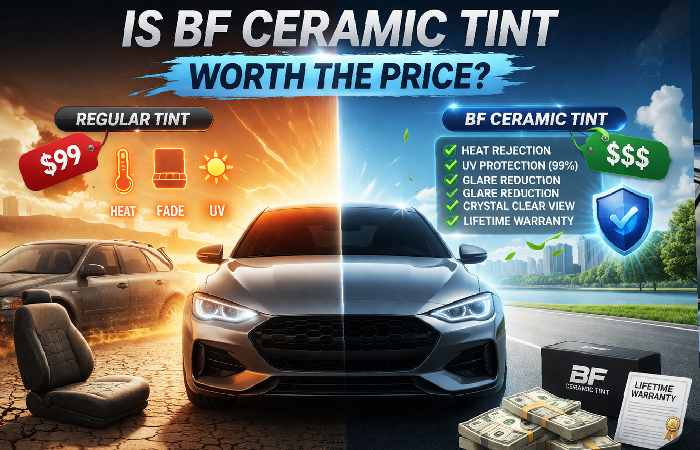
- Superior Heat Rejection (Biggest Reason)
- Blocks 80–95% of infrared heat
- Can reduce interior temperature by 15–30°F (8–15°C)
- Rejects 60–70% total solar energy in high-quality films
Real impact:
- Less “oven-like” heat inside your car
- Faster AC cooling
- More comfortable driving
- Long-Term Cost Savings
Even though ceramic tint costs 20–50% more upfront
It saves money over time because:
- No frequent replacement (lasts 7–10+ years)
- Reduced AC usage → slight fuel savings
- Protects interior (dashboard, seats, electronics)
Over time, cost difference becomes small.
- Maximum UV Protection
- Blocks 99% of harmful UV rays
This helps:
- Prevent skin damage
- Stop fading/cracking of interiors
- Maintain resale value
- No Signal Interference
Unlike metallic tints:
- No issues with GPS, mobile signal, or Bluetooth
Important for modern cars with tech systems.
- Premium Durability
- Doesn’t fade, turn purple, or bubble easily
- Often comes with long warranties (5–10+ years)
You install once and forget.
When It’s NOT Worth the Price
BF ceramic tint may NOT be worth it if:
- You’re on a tight budget
- Basic tint is 2–3x cheaper
- You only want privacy (not heat protection)
- Cheaper films already provide darkness
- You don’t keep your car long
- Benefits come over time (2–5+ years)
Real-World Example
To truly understand the value of BF ceramic tint, let’s look at a practical, real-world scenario backed by actual performance data and user experience.
Example: Sedan Owner in a Hot Climate (India / UAE Type Conditions)
Scenario
- Vehicle: Mid-size sedan
- Location: Hot climate (35–42°C summer)
- Parking: Outdoor, direct sunlight
- Tint Installed: Premium BF ceramic tint (around ₹25,000 / $400–$600 equivalent)
Before Installing Ceramic Tint
- Interior temperature after 1–2 hours: ~60–70°C (140–158°F)
- Steering wheel: Too hot to touch
- AC cooling time: 10–15 minutes
- Driving comfort: Poor (strong heat from windows)
This is normal—cars act like a “greenhouse,” trapping heat inside.
After Installing BF Ceramic Tint
Measurable Improvements
- Interior temperature reduced by 15–30°F (8–15°C)
- Heat entering through windows reduced by 70–95% (infrared)
- Total solar energy rejection: 65–80%
What the Driver Actually Notices
- Cooler Cabin (Immediate Difference)
- Car still gets warm, but not unbearably hot
- Dashboard and seats feel warm instead of burning
Real-world tests show ceramic tint can lower peak interior temps by up to 30–40°F in extreme cases
- Faster AC Cooling
- AC cools cabin in 5–7 minutes instead of 10–15
- Less strain on AC system → better efficiency
- Comfortable Driving Experience
- Less heat hitting arms and face from windows
- Reduced glare during daytime driving
- Long-Term Benefits
- Dashboard and seats don’t fade or crack
- Lower AC usage → slight fuel savings
- Better comfort for passengers (especially kids)
How to Choose the Best BF Ceramic Tint
Choosing the best BF ceramic tint isn’t just about picking the darkest film or the cheapest option. Many products labeled “ceramic” vary widely in performance, quality, and durability. Here’s a clear, step-by-step guide to help you choose the right one confidently.
Understand What “True Ceramic” Means
Not all ceramic tints are equal.
- True ceramic tint uses nano-ceramic particles to block heat and UV rays
- Low-quality versions may contain very little ceramic content
High-quality ceramic films can reject 50–65% of total solar energy and block 99% UV rays
Pro Tip: Always ask for TSER (Total Solar Energy Rejected) and IRR (Infrared Rejection) data—not just “99% UV protection.”
Choose Based on Heat Rejection (Not Darkness)
Most people make this mistake
Darker tint = better cooling (WRONG)
Heat comes from infrared radiation, not visible light
- A 35% ceramic tint can outperform a 5% cheap tint in heat blocking
What to look for:
- IR Rejection: 70%–95%+ (premium)
- TSER: 50%+ (good), 60%+ (excellent)
Check Visible Light Transmission (VLT)
VLT determines how dark your tint is.
| VLT % | Visibility | Best For |
| 70% | Almost clear | Windshield |
| 50% | Light tint | Night driving |
| 35% | Balanced | Most drivers |
| 20% | Dark | Privacy |
| 5% | Very dark | Rear windows |
Important: Lower VLT = darker tint but may be illegal in some regions.
Verify Legal Limits (Very Important in India)
Before buying BF ceramic tint:
- Front windshield → ~70% visibility required
- Side windows → ~50% visibility
Installing illegal tint can lead to fines or removal.
Compare Film Quality Levels
Quick Comparison
| Feature | Basic Ceramic | Premium BF Ceramic |
| Heat Rejection | 40–60% | 70–90% |
| UV Protection | ~99% | 99%+ |
| Clarity | Moderate | High |
| Lifespan | 3–5 years | 7–10 years |
Premium films maintain performance longer and don’t fade or bubble easily
Common Mistakes to Avoid
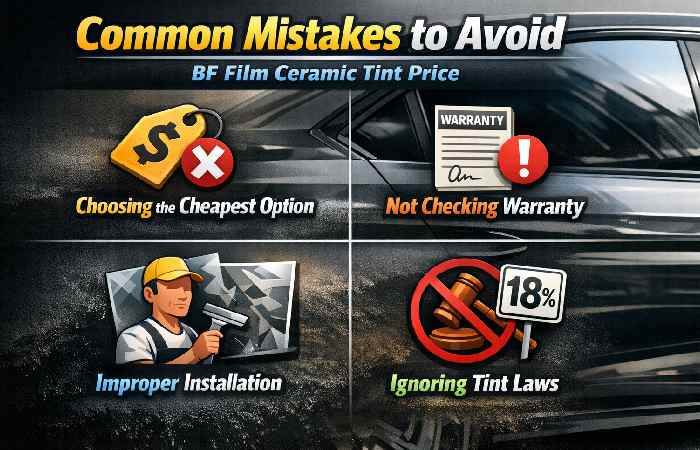
- Choosing cheapest ceramic film (often fake)
- Ignoring warranty
- DIY installation (leads to bubbles)
- Not checking visibility laws
FAQ
What is the average BF ceramic tint price?
Typically ranges from ₹12,000 to ₹35,000 in India and $250 to $900 in the US depending on vehicle and quality.
How long does ceramic tint last?
High-quality BF ceramic films last 7–10 years with proper care.
Is ceramic tint legal in India?
Yes, but only within visibility limits (70% front, 50% sides).
Does ceramic tint block heat completely?
No, but it can reduce heat by up to 80%, making interiors significantly cooler.
Can I install ceramic tint myself?
Not recommended. Professional installation ensures durability and proper adhesion.
Final Conclusion
BF film ceramic tint price may seem high initially, but it delivers unmatched performance in heat rejection, UV protection, and durability. Whether you’re in India or abroad, investing in a high-quality ceramic tint is a smart long-term decision for comfort and vehicle protection. If you want the best balance of performance and value, BF film ceramic tint stands out as one of the top choices in 2026.
 About
About